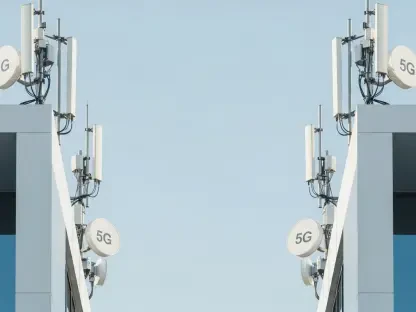

Walking through the sprawling Fira de Barcelona during the current Mobile World Congress reveals a staggering contradiction between the record-shattering attendance and the somber, almost apocalyptic warnings issued by the world’s most powerful telecom executives. What does it say about an industry when it breaks historical attendance records, pays out some of the highest dividends on the stock market, and yet spends its largest annual gathering claiming to be on the brink of financial ruin? The halls are currently packed with more than 100,000 visitors, signaling a complete and triumphant recovery from the “zombie apocalypse” of the pandemic era. However, beneath the flashing LED screens and high-tech booths lies a persistent psychological phenomenon: a chronic disconnect between the industry’s “Greek tragedy” rhetoric and its robust, resilient balance sheets.
The atmosphere in Barcelona is electric with the energy of a sector that has reclaimed its physical footprint, yet the mood within the executive suites remains curiously dark. While the vendors showcase futuristic connectivity solutions and the crowds swarm around the latest hardware, the overarching narrative pushed by industry leadership is one of systemic struggle. This paradox is the defining feature of the current landscape. It suggests that while the operational and consumer-facing aspects of telecommunications are thriving in a post-pandemic world, the corporate identity is stuck in a loop of managed pessimism. This internal conflict shapes the way the industry interacts with investors and governments, creating a confusing image of a titan that insists it is stumbling while it actually strides forward with significant momentum.
The Anatomy of Telecom Derangement Syndrome (TDS)
Telecom Derangement Syndrome is increasingly defined by a stubborn refusal to acknowledge the maturity and stability of the sector, with leaders opting instead for a narrative of terminal decline. This psychological stance is critical because the gap between executive pessimism and market data influences everything from European regulatory policy to global investment strategies. The “mind virus” of perpetual grievance has shifted from the empty halls of a few years ago to today’s record crowds without losing its intensity. Even as the physical evidence of growth surrounds them, many bosses continue to portray the industry as “bleeding out,” a tactic that seems more aligned with strategic lobbying than with the actual financial health of their organizations.
The disconnect between rhetoric and reality is particularly striking when examining stock performance. While telecom bosses use their keynote speeches to lament a lack of profitability, many of their companies’ stock prices have begun to outpace local market indexes. This suggests that the investment community sees a value that the executives themselves are hesitant to publicly admit. The strategic use of “gloom” functions as a tool to pressure regulators for more lenient merger conditions and less stringent oversight. By framing the industry as a patient in the intensive care unit, these leaders hope to bypass competition laws that protect consumer interests, even though their financial metrics suggest the patient is actually in excellent physical condition.
Furthermore, this syndrome prevents the industry from celebrating its genuine successes. By focusing on perceived failures, such as the lag in specific high-frequency 5G spectrum compared to other regions, the sector overlooks its role as the indispensable backbone of the modern economy. The narrative of decline is a choice, one that seeks to trade the perception of stability for the possibility of greater market dominance through consolidation. This refusal to pivot toward a more realistic and positive identity creates a credibility gap with both the public and savvy policymakers who look beyond the speeches to the actual profit-and-loss statements.
Deconstructing the Financial Myth of the “Dying” Telco
The primary argument used by industry leadership—that European markets are too fragmented to be profitable—frequently collapses when subjected to rigorous financial scrutiny. Metrics developed by organizations like the Centre for Economic Policy Research (CEPR) provide a clearer picture of genuine value creation for shareholders by comparing the Return on Capital Employed (ROCE) against the Weighted Average Cost of Capital (WACC). For much of the recent period, including the projections for 2026 to 2028, these figures show that major operators are consistently generating returns that exceed their costs. The “crisis” narrative relies on a selective interpretation of data that ignores the long-term nature of infrastructure investment.
The perceived compression of returns in recent years was largely a result of a 5G capital expenditure mirage. Heavy front-loaded spending during the initial rollout phase naturally led to a temporary dip in profitability, a standard cycle for any capital-intensive industry. As these networks mature and the focus shifts from building to monetizing, the financial pressure has begun to lift. Despite the claims of financial ruin, the telecommunications sector remains a top performer for income-seeking investors, characterized by dividend payouts that are the envy of other more volatile industries. The industry is not dying; it is simply entering a phase of stable, utility-like maturity that provides consistent, if not explosive, returns.
This financial stability is why regulators like Teresa Ribera remain skeptical of “no-strings-attached” mergers. The consolidation conundrum stems from a clash between corporate desires for higher margins and the regulatory duty to maintain a competitive environment for consumers. European oversight bodies recognize that the “starving telco” narrative is often a strategic exaggeration. Proving that the sector can thrive while maintaining a high level of competition is a key challenge for regulators who refuse to be swayed by the industry’s pessimistic lobbying. The focus remains on ensuring that infrastructure remains robust without sacrificing the affordability and choice that have defined the European digital market.
Technological Divergence: The 5G Obsession and the Fiber Reality
Industry leadership often cites a “5G gap” with the United States and China as definitive proof of European failure, yet this selective use of data ignores a more vital infrastructure victory. While other regions may have prioritized cellular density, Europe has achieved a significant lead in Fiber-to-the-Home (FTTH) coverage. Recent data indicates that fiber availability across the continent has reached approximately 75%, creating a stronger and more sustainable long-term foundation for the digital economy than the mobile-first strategies seen elsewhere. This fiber-optic backbone is the silent engine of modern connectivity, providing the stability and speed that 5G towers ultimately rely upon.
The fixation on 5G rollouts often overlooks the reality of how people actually use data. Approximately 80% of mobile data traffic currently travels over fiber-backed Wi-Fi networks rather than cellular antennas. This makes the speed of a 5G rollout less critical than the industry’s rhetoric would suggest. By building out a world-class fiber network, Europe has secured a competitive advantage in fixed-line connectivity that supports everything from remote work to high-definition entertainment. The “invisible backbone” of Wi-Fi and fiber is where the real value lies, even if it lacks the marketing sheen of the latest mobile spectrum auctions.
However, the path toward a “Single European Market” for telecommunications remains blocked by significant political and national hurdles. While corporate leaders advocate for cross-border streamlining to achieve scale, national governments view telecommunications as a matter of sovereignty and national security. The desire for corporate efficiency often clashes with the necessity of maintaining independent control over critical infrastructure. Consequently, the industry must navigate a complex landscape where political interests frequently outweigh the financial arguments for consolidation. This divergence between technological capability and political reality defines the current strategic impasse.
The Great AI Delusion: From Growth Savior to Automation Tool
At the current gathering in Barcelona, Artificial Intelligence is being touted as the ultimate cure for stagnant growth, yet the “AI inference” gold rush faces significant structural hurdles. Telcos are currently investing heavily in high-end hardware, hoping to provide low-latency edge processing that they claim only their networks can deliver. However, the actual market demand for sub-millisecond processing remains largely unproven outside of niche industrial applications. The idea that consumers or average businesses require AI processing at the network edge is a speculative leap that has yet to manifest in significant revenue streams.
The market for AI services is also increasingly crowded and dominated by established technology giants who have already secured the lion’s share of the software and platform market. Telcos risk becoming mere infrastructure providers for these giants, rather than leaders in the AI space themselves. Instead of creating new growth through innovative services, many operators are finding that AI’s most immediate impact is on internal operations. It is being used primarily as an automation tool to reduce human staff and improve margins through efficiency rather than through the creation of new products. This shift toward “automation over innovation” reflects a defensive strategy rather than a transformative one.
There is also a growing irony in the industry’s pursuit of AI independence. While telcos seek to move away from their perceived subservience to Big Tech, they are becoming increasingly reliant on a small number of American hardware providers for the necessary chips and processing power. This creates a new dependency trap that could limit the very autonomy the industry claims to seek. The reliance on external vendors for the core components of the AI revolution suggests that the path to becoming “AI-first” organizations is fraught with risks that could further consolidate power in the hands of the few companies that control the hardware supply chain.
Navigating the Mature Utility Framework: Strategies for Realism
The transition toward a more realistic outlook for the telecommunications industry was marked by a gradual acceptance of its identity as a critical utility. Industry leaders moved away from the cycle of grievance by aligning their public rhetoric with the actual strength of their balance sheets. This shift allowed for more transparent communication with regulators and investors, moving past the hyperbolic claims of impending collapse toward a more nuanced discussion of long-term sustainability. By acknowledging that the sector was a stable pillar of the economy, executives were able to build more constructive relationships with the oversight bodies that once viewed them with deep suspicion.
Strategic focus shifted significantly away from chasing mirage-like growth opportunities and toward the long-term monetization of superior fiber networks. This move recognized that the true value of the industry lay in its role as the stable backbone of the digital world. Infrastructure was prioritized over the hype surrounding every new technological cycle, ensuring that capital expenditures were directed toward projects with clear and measurable social and economic benefits. This pragmatism helped stabilize the sector’s reputation, positioning it as a safe harbor for capital in an increasingly volatile global market.
Ultimately, embracing a utility-like identity allowed the industry to maintain high dividend yields while accepting a role that was less about explosive expansion and more about reliable service. The constant demand for market consolidation was replaced by a strategy of operational excellence within existing competitive frameworks. Leaders focused on human-centric innovation and the ethical deployment of automation, ensuring that efficiency gains did not come at the cost of essential technical knowledge. This new era of realism provided a foundation for steady growth, ensuring that the telecommunications sector remained the vital, though perhaps less flashy, core of global connectivity.