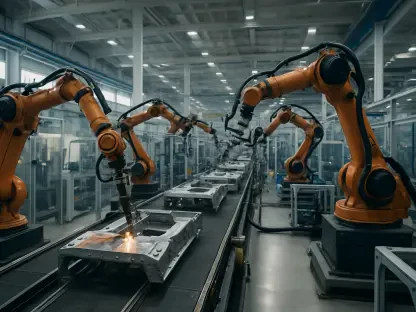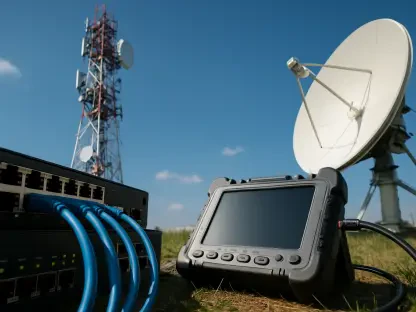

The rapid proliferation of generative artificial intelligence has fundamentally altered the requirements of the physical facilities that house the massive processing units and data storage systems necessary for modern innovation. To address the resulting technical fragmentation, SK Telecom successfully spearheaded a monumental effort to establish the first international technical benchmark for AI Data Center (AIDC) architecture through the International Telecommunication Union (ITU-T). This newly approved standard represents a departure from the isolated development of proprietary hardware and software stacks, offering instead a unified framework that defines the signaling requirements and structural logic essential for high-performance computing.
By securing this approval at the ITU meeting in Geneva, the industry gained a formal roadmap for the orchestration of complex AI environments. This development is significant because it moves the focus from individual components to a holistic ecosystem where different technologies can function in unison. The transition to a global standard ensures that as the demand for AI continues to surge, the infrastructure supporting it will remain resilient, interoperable, and capable of handling the unprecedented stress of large-language model training and real-time inference.
Establishing a Global Technical Benchmark for AI Infrastructure
The new ITU-T standard for AIDC architecture and signaling requirements provides a precise definition of how internal systems must communicate to maintain operational integrity. By establishing these rules, the framework addresses the critical challenges of interconnecting complex, high-performance AI computing environments that often rely on hardware from dozens of different vendors. This uniformity is essential for preventing the system failures that can occur when mismatched components attempt to process the massive, bursty data loads typical of modern AI workloads.
Furthermore, the approval marks a strategic shift from proprietary technological blueprints toward a unified international framework. In the past, the lack of a common language meant that companies were often locked into specific hardware ecosystems, limiting their flexibility and increasing costs. This international benchmark provides a neutral ground where innovation can thrive without being hampered by compatibility issues, effectively setting the stage for a more competitive and diverse global market for AI infrastructure services.
Contextualizing the Evolution from Traditional Data Centers to AIDCs
Examining the transition from general-purpose storage facilities to specialized, high-density computational hubs reveals why traditional infrastructure is no longer sufficient. Conventional data centers were built to handle steady streams of internet traffic and storage requests, but AIDCs are designed for the explosive, energy-intensive tasks of training neural networks. This evolution has turned data centers into massive, centralized engines of calculation, requiring an entirely different approach to physical layout, power distribution, and thermal management.
The rising global demand for generative AI has placed an immense strain on existing digital infrastructure, necessitating the development of these specialized hubs. Without standardized signaling “grammar,” these facilities face significant operational bottlenecks, as the management software struggles to coordinate between disparate hardware layers. Standardizing these interactions ensures that the power grid, the cooling systems, and the computational cores work as a single, efficient organism rather than a collection of competing subsystems.
Research Methodology, Findings, and Implications
Methodology
The development of the standard utilized a systematic three-tiered architectural approach to categorize service, management, and infrastructure functions into distinct but interconnected layers. This methodology allowed researchers to isolate the specific communication needs of each tier, ensuring that user-level requests do not conflict with hardware-level resource management. By developing standardized signaling protocols based on real-world operational challenges, the research team was able to create a model that remains robust even under the highest loads imaginable in a modern AI environment.
To clarify these complex interactions, the study applied an “airport analogy” model to simulate and define the roles of different AIDC components. Within this model, the physical hardware serves as the runways, the management layer functions as air traffic control, and the AI services are the airlines. This analogy helped define the precise signaling requirements needed to ensure that data “flights” are dispatched and received according to a strict, global protocol, preventing the digital equivalent of runway congestion or mid-air collisions.
Findings
Validation of the research resulted in a structured hierarchy that successfully separates user-facing authentication from internal resource logistics and physical hardware management. One of the most significant findings was that this separation allows for more agile resource allocation, as the management layer can shift computational power between different tasks without requiring a full system reboot or manual intervention. This hierarchy ensures that the end-user experience remains smooth even as the physical hardware underneath is being dynamically reconfigured.
Additionally, the research identified critical synchronization points between high-density cooling systems and massive energy grids. The study confirmed that a unified management layer effectively coordinates dynamic GPU and memory allocation across multi-vendor components, preventing localized overheating. These findings demonstrated that when the cooling system is directly linked to the computational signaling layer, the facility can reduce its total energy consumption by anticipating heat spikes before they occur, rather than reacting to them after the fact.
Implications
The implications of this standard are far-reaching, as it enables the global interoperability of AI infrastructure by allowing the seamless integration of hardware regardless of the manufacturer. This interoperability means that an enterprise can build a data center using the best available components from around the world without fearing that they will be unable to communicate. By providing a pre-validated blueprint for AIDC construction, the standard significantly reduces the technical barriers to entry for corporations and governments looking to build their own AI capabilities.
Moreover, the approval positions SK Telecom as a “Global AIDC Developer” capable of exporting comprehensive solution packages to international markets. This shift transforms the company from a regional operator into an international architect of digital progress. As countries look to establish sovereign AI capabilities, the existence of a globally recognized standard provides the necessary framework to build facilities that are secure, efficient, and ready to be integrated into the broader global digital economy.
Reflection and Future Directions
Reflection
Analyzing the success of transforming corporate innovation into a global consensus at the ITU meeting in Geneva highlights the power of collaborative technical leadership. The process demonstrated that even the most competitive players in the technology sector recognize the value of a shared foundation for the next generation of infrastructure. Evaluation of the project reveals that the greatest challenge was not the hardware itself, but the task of streamlining multifaceted subsystems—such as advanced security and thermal stability—into a single, cohesive signaling standard.
The project also forced a consideration of the importance of international cooperation in overcoming the silos of proprietary technology. When companies work in isolation, they often create solutions that are difficult to scale or integrate, leading to a fragmented global landscape. By seeking ITU approval, the researchers prioritized the long-term health of the AI ecosystem over short-term proprietary control, suggesting that the future of technology lies in open, standardized frameworks that benefit all participants.
Future Directions
Future investigations will likely explore the development of additional standards for green energy integration within these standardized AIDCs. As the environmental impact of AI becomes a more pressing global concern, the next phase of development must focus on how these facilities can automatically adjust their workloads to match the availability of renewable energy. Creating protocols for this type of “energy-aware” computing will be essential for the sustainability of the industry as it continues to expand toward even larger computational scales.
There is also significant potential for the development of automated, AI-driven management layers that can self-optimize based on real-time computational demand. These systems would move beyond static rules toward a more dynamic model where the data center itself learns how to best allocate its resources. Furthermore, the impact of this standard will likely extend to the future deployment of edge AI and regional AI hubs, allowing the same high-performance architecture to be deployed in smaller, more localized environments to support low-latency applications.
Conclusion: Pioneering the Backbone of the Global AI Economy
The validation of this international technical benchmark by the ITU finalized a crucial period in the evolution of digital infrastructure, confirming that the path toward a sustainable AI economy required a unified structural foundation. By establishing clear signaling requirements and a tiered architectural model, the framework ensured that future data centers remained scalable, secure, and prepared for the mounting demands of the global market. This achievement solidified the role of technical benchmarks in accelerating the deployment of large-scale artificial intelligence while reducing the risks of technological fragmentation.
As enterprises and governments moved to adopt these standardized blueprints, the focus shifted toward optimizing the efficiency of existing networks rather than building isolated systems. The move provided the global community with a reliable methodology for managing the intersection of high-density hardware and complex software services. Ultimately, the standard acted as a catalyst for the democratization of AI resources, ensuring that the foundational backbone of the digital age remained open and accessible to innovators worldwide.