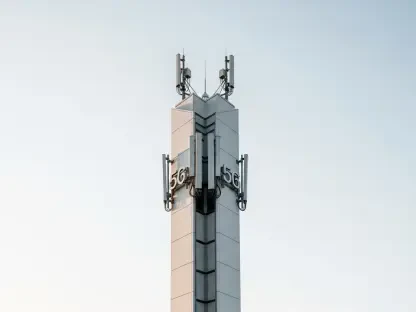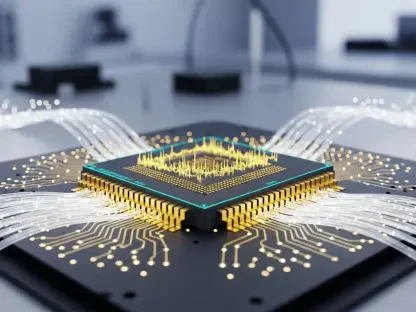

The global telecommunications landscape is undergoing a massive transformation as the integration of high-performance computing and artificial intelligence becomes the standard for next-generation network architecture and operational efficiency. This evolution is characterized by a fundamental shift away from specialized, rigid hardware toward flexible, software-defined environments that can adapt to fluctuating data demands in real time. Samsung Electronics and AMD have recently intensified their strategic collaboration to address these requirements, moving beyond initial proof-of-concept stages to full-scale commercial deployment. By merging Samsung’s deep expertise in wireless infrastructure with AMD’s advanced processor capabilities, the two entities are creating a robust ecosystem for 5G Core, virtualized RAN, and private networks. This partnership underscores a shared vision where intelligence is embedded directly into the fabric of the network, ensuring that global connectivity remains resilient, scalable, and capable of supporting the increasingly complex needs of modern digital societies.
Transforming Core Infrastructure with High-Performance Computing
A pivotal milestone in this partnership surfaced with the selection of Samsung by Videotron, a major Canadian telecommunications provider, to deploy advanced 5G Non-Standalone and 4G LTE Core gateway solutions across its national footprint. At the heart of this deployment are the AMD EPYC 9005 Series processors, which provide the computational density and efficiency required to manage massive volumes of subscriber traffic without sacrificing speed or reliability. By leveraging general-purpose processors for such intensive tasks, the collaboration effectively reduces the dependency on proprietary, single-function hardware that has traditionally limited operator flexibility. This implementation serves as a real-world validation of how cloud-native AI core architectures can be scaled efficiently in demanding environments. The success of this rollout demonstrates that high-performance x86 architectures are now fully capable of meeting the stringent low-latency and high-throughput requirements of modern mobile networks while maintaining high power efficiency.
This transition toward a software-driven core infrastructure provides mobile operators with unprecedented agility when launching new services or adjusting to regional capacity spikes. Using the EPYC processor family allows Samsung to offer a more unified platform where the same hardware can be repurposed or optimized through software updates, significantly lowering the total cost of ownership over the long term. Furthermore, the integration of AI-driven optimization within the core network enables more intelligent traffic routing and predictive maintenance, which are essential for maintaining uptime in an era of hyperconnectivity. Operators are no longer constrained by the slow development cycles of traditional networking equipment; instead, they can adopt a continuous deployment model that mirrors the rapid pace of the broader software industry. This strategic move by Videotron highlights a broader industry trend where the performance of general-purpose server hardware has finally caught up to the specialized needs of telecommunications gateways.
Redefining Performance in Virtualized Radio Access Networks
Beyond the core network, Samsung and AMD have achieved significant breakthroughs in the realm of virtualized Radio Access Networks by proving that commercial-grade performance can be attained using a fully virtualized software stack. Recent multi-cell testing conducted at Samsung’s specialized research and development facilities confirmed that AMD EPYC processors can handle intensive RAN workloads without the assistance of external hardware accelerators. This accomplishment is particularly noteworthy because it simplifies the hardware bill of materials for mobile operators, reducing physical complexity and power consumption at the edge. By eliminating the need for custom-built expansion cards, the partnership has streamlined the deployment of vRAN solutions, making them more accessible for both large-scale public networks and specialized private enterprise environments. This leap in processing efficiency ensures that AI-powered network functions can run natively alongside traditional communication protocols, creating a converged infrastructure.
The implications of these advancements are being showcased on a global stage, emphasizing how integrated technologies enable scalable and flexible network environments that were previously unattainable. The ability to manage multiple cells on a single server platform signifies a major step toward the democratization of advanced 5G technology, allowing smaller providers and industrial players to deploy high-performance networks with less upfront capital. These software-based environments are designed to be inherently elastic, meaning they can expand or contract based on local demand, which is a critical feature for supporting smart cities and automated industrial zones. As the industry moves toward more open and interoperable standards, the collaboration between these two tech giants provides a blueprint for how hardware and software providers can work together to solve the most pressing challenges in wireless communication. This methodology ensures that the network is no longer a static asset but a dynamic, programmable resource.
Pioneering Edge-AI and Next-Generation Connectivity
The collaboration further extends into the burgeoning field of enterprise-level Edge-AI through Samsung’s “Network in a Server” solution, which acts as a fully virtualized, next-generation platform. This innovative architecture is specifically designed to simplify the integration of artificial intelligence into existing network nodes, lowering operational complexity for service providers who need to process data closer to the end user. Real-world applications of this technology are currently undergoing rigorous verification with a major Japanese operator, focusing on sophisticated use cases such as real-time video analysis and Integrated Sensing and Communication. By using AMD CPUs to power these server-based networks, Samsung enables radar-like detection and hyperconnectivity for a new generation of autonomous devices and sensors. This approach allows operators to offer value-added services that go beyond simple data transmission, transforming the network into an intelligent sensing platform that can interact with its physical surroundings.
The collective efforts of Samsung and AMD established a clear path forward for the global telecommunications industry by prioritizing AI-native and open architectures. Mobile operators were encouraged to transition away from legacy systems in favor of virtualized solutions that offered greater infrastructure optionality and the scalability required for future innovations. By successfully demonstrating that general-purpose processors could handle the most demanding 5G workloads, the partnership removed a significant barrier to the widespread adoption of cloud-native networking. This shift not only improved operational efficiency but also ensured that modern infrastructures were robust enough to handle the evolving data demands of global users. Ultimately, the partnership reinforced a shared commitment to building a technology-forward ecosystem that accelerated the evolution toward a more connected and intelligent world. Stakeholders were advised to focus on software-centric strategies to maintain a competitive edge in this rapidly changing technological landscape.