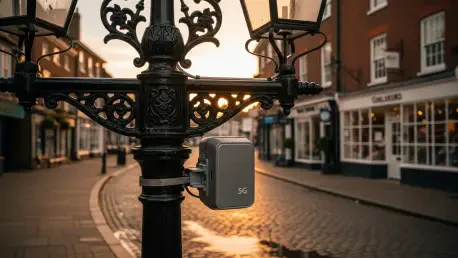

The challenge of delivering seamless, high-speed mobile connectivity in historically rich urban centers has become a critical hurdle for network operators, as the demand for data in crowded public spaces often outpaces the capacity of traditional infrastructure. In the heart of Guildford, a strategic initiative is addressing this very issue head-on by integrating advanced 4G and 5G technology directly into the city’s existing landscape. Mobile operator O2, in a collaborative effort with infrastructure provider Freshwave and the Surrey County Council, is deploying a network of thirteen outdoor small cells to significantly enhance coverage and capacity. Nine of these compact, shoebox-sized units are already operational, discreetly mounted on street furniture like lamp posts. This approach ensures that high-traffic areas, including the bustling high street, the historic grounds around Guildford Castle, and the busy train station, receive a powerful connectivity boost without compromising the town’s cherished aesthetic. This project represents a modern solution to a growing urban problem, promising a better mobile experience for residents, commuters, and visitors alike.
A Collaborative Blueprint for Urban Connectivity
The effectiveness of the Guildford deployment stems from a highly efficient and cooperative model that streamlines the process of network enhancement. At a technical level, the small cells function by handling mobile traffic at street level, which effectively offloads data from the broader macro network. This decentralization prevents the network congestion that often leads to slowed speeds and dropped connections during peak hours, allowing a greater number of O2 customers to make calls, send messages, and stream content simultaneously. The partnership’s structure is equally innovative, leveraging an open access agreement with the council. This allows Freshwave to act as a neutral host, installing infrastructure that can potentially be used by multiple operators in the future. This model not only accelerates the rollout timeline but also minimizes public disruption and reduces the visual clutter of redundant street-level equipment. It’s a smart, forward-thinking approach that prioritizes both technological performance and civic responsibility, creating a framework that could be replicated in other towns facing similar connectivity challenges.
Strengthening the Digital Foundation
The successful implementation of this small cell network represented a significant step forward in fulfilling wider strategic goals for all parties involved. For Surrey County Council, the project was a key component of its Digital Strategy, a long-term plan aimed at modernizing public spaces and strengthening the local economy through improved digital infrastructure. By providing reliable, high-speed connectivity, the initiative supports local businesses and enhances the experience of everyone using the city center. For O2, this targeted deployment was a crucial part of its £700 million Mobile Transformation Plan, designed specifically to meet record demand across its network by investing in capacity where it is needed most. The project ultimately demonstrated how a focused, partnership-driven approach could yield substantial benefits, delivering next-generation connectivity that supports a community’s economic and social vitality while respecting its unique character. This collaboration proved to be a powerful example of how public and private entities could work together to build a digitally inclusive future.