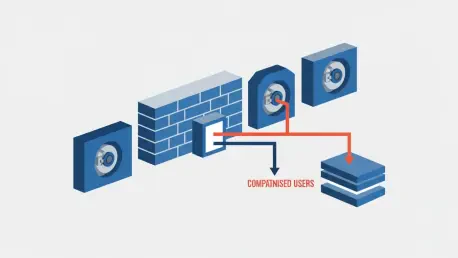

In a digital age where corporate firewalls are fortified to withstand external onslaughts, a major Nigerian telecommunications company discovered that its most devastating threat did not come from the outside but from within its own trusted network. A highly organized syndicate successfully exploited internal security vulnerabilities to orchestrate a sophisticated heist, siphoning approximately NGN 7.7 billion, equivalent to USD 5.5 million, in digital assets. The breach was not the result of a brute-force cyberattack but rather a quiet infiltration made possible by compromised employee credentials. This method allowed the perpetrators to bypass formidable external defenses and gain direct access to the company’s core billing and payment systems. The incident underscores a critical, and often underestimated, a weak point in corporate security: the insider threat. By operating from inside the digital walls, the criminals were able to execute a massive fraud scheme that went undetected, turning the company’s own infrastructure into an engine for their illicit profit and highlighting the severe risks posed by internal security lapses.
A New Breed of Digital Heist
The syndicate’s operational brilliance lay in its understanding of a unique economic trend within the African telecommunications market. Instead of attempting a complex breach of external security protocols, the criminals focused on the human element, successfully obtaining and using the login credentials of internal staff. This gave them privileged access to the company’s central billing and payment infrastructure, the very heart of its revenue-generating operations. They recognized that prepaid airtime and mobile data are not just commodities; in many parts of the continent, they function as a liquid and easily transferable digital currency alternative. The syndicate essentially hacked the mint, using their insider access to generate vast, unauthorized quantities of this digital cash. They created an almost limitless supply of prepaid airtime and data, which they then systematically funneled into the retail market. This digital product was sold for real money, effectively laundering the synthetically created assets into hard currency and completing a highly lucrative and innovative criminal cycle.
The Aftermath and Industry Wake-Up Call
The elaborate criminal enterprise was brought to a halt following a meticulous investigation that culminated in a series of coordinated police raids across Kano, Katsina, and Abuja in October 2025. The operation led to the arrest of six named suspects, who were identified as key figures in the syndicate. The true scale of their illicit business was revealed through the seizure of substantial assets acquired with the proceeds of the fraud. Authorities confiscated numerous residential houses, several mini-plazas, and multiple retail outlets that were found stocked with over 400 laptops and 1,000 mobile phones. Additionally, a vehicle and significant funds held in various bank accounts were frozen. The nature and volume of the seized property made it clear that this was not a simple act of theft but a well-structured commercial operation. The case served as a major wake-up call for the telecommunications industry, demonstrating the profound need for more robust internal cybersecurity protocols and stringent access controls to protect easily monetizable digital resources from sophisticated internal threats.