
An Unprecedented Leap from Signal Loss to Seamless Streaming
For generations of Londoners and tourists, the descent into the London Underground has been synonymous with a predictable ritual: the final scroll of a webpage, the hasty sending of a text, and the inevitable disappearance of signal bars. The Tube, a sprawling subterranean world, remained one of the last urban frontiers immune to the relentless hum of digital connectivity. That era is rapidly drawing to a close. A monumental engineering project, spearheaded by neutral host provider Boldyn Networks in a landmark partnership with Transport for London (TfL), is on track to blanket the entire network with high-speed 4G and 5G service. This article explores the intricate technology, the innovative collaborative model, and the profound cultural shift that will redefine the daily commute for millions as the Underground transforms from a digital black hole into a fully connected extension of the city above.
From Disconnected Tunnels to a Connected Future: A Brief History
The absence of mobile service on the Tube was not due to a lack of desire but rather a reflection of immense technical and financial hurdles. The system’s age, depth, and complex layout of narrow tunnels and historic stations made traditional network deployment prohibitively expensive and logistically nightmarish for any single mobile operator. While Wi-Fi has been available at many stations for over a decade, it offered only a fragmented experience, cutting out the moment a train departed the platform. This long-standing connectivity gap placed London behind many other global cities whose metro systems had long offered continuous mobile service. The current project represents a fundamental shift in strategy, moving away from siloed, competitive infrastructure builds toward a collaborative, shared model capable of finally conquering one of modern telecommunications’ most formidable challenges.
The Anatomy of a Subterranean Network
Engineering the Impossible: Technology Beneath the Streets
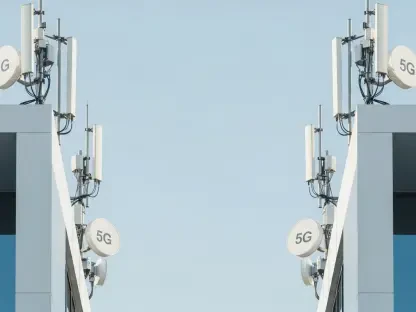
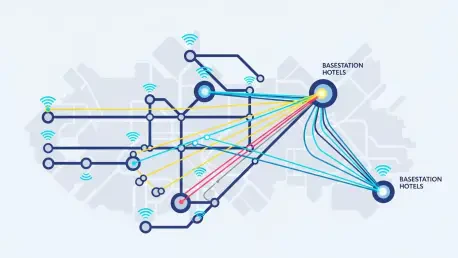
The technical solution bringing high-speed data to fast-moving trains deep underground is a masterpiece of modern engineering. To provide continuous coverage within the network’s extensive tunnels, Boldyn Networks has installed thousands of kilometers of “leaky feeders”—specialized coaxial cables designed with tiny, precisely spaced slots that allow the radio signal to “leak” out, effectively turning the entire cable into a long, continuous antenna running parallel to the tracks. On station platforms, the infrastructure is more discreet, with small, white, saucer-sized radios mounted on ceilings to provide localized coverage for waiting passengers. This public-facing equipment is supported by a robust back-office network of server cabinets and fiber-optic cables, all of which connect to one of nine strategically located “basestation hotels” across the city. This architectural choice was dictated not by convenience but by the laws of physics; the time it takes for a signal to travel down a fiber cable and back must fall within a strict tolerance, limiting the maximum distance between a basestation and a station to approximately 12 kilometers.
A New Blueprint: The Neutral Host and Public-Private Partnership Model
The project’s success hinges on a sophisticated commercial structure as much as its technology. Boldyn Networks operates as a “neutral host,” building and managing a single, unified infrastructure that is then leased to all three of the UK’s major mobile network operators: BT/EE, Virgin Media O2, and the newly merged Vodafone and Three. This model allows the operators to share the immense capital cost, making a project that was once unfeasible for any single company an economically viable collective investment. This public-private partnership extends further, involving TfL, which provides access and oversight, and the UK Home Office, which has co-funded infrastructure in non-public areas to ensure the new system supports the critical Emergency Services Network (ESN). This multi-stakeholder collaboration provides a powerful blueprint for future large-scale urban infrastructure projects.
The Business Case: Beyond Direct Revenue to Customer Experience
With a cost estimated in the hundreds of millions of pounds, the financial rationale for the mobile operators is not based on immediate, direct returns. Customers are unlikely to see their monthly bills increase as a result of the new service. Instead, the investment is a strategic play focused on customer satisfaction and loyalty. In a fiercely competitive market, offering seamless connectivity in a place where it was previously nonexistent is a powerful value-add and a significant differentiator. For millions of daily commuters, the ability to work, stream, or stay in touch underground is a tangible improvement to their quality of life. The project also addresses a matter of national prestige, finally bringing London’s public transport connectivity in line with that of other leading global cities and enhancing its reputation as a world-class technology hub.
The Future of the Commute: A Fully Connected Journey
As the rollout nears completion, with a target for full coverage by the end of 2026, the daily rhythm of the London commute is set to fundamentally change. The forced downtime of a Tube journey will be transformed into an opportunity for productivity, entertainment, and communication. Professionals will be able to answer emails and join video calls without interruption, while other passengers can stream movies, listen to podcasts, or scroll through social media seamlessly from tunnel to station. This innovation aligns with broader societal trends toward flexible work and the expectation of “always-on” connectivity. The introduction of a reliable signal will not only change individual passenger behavior but will also open new possibilities for data-driven services from TfL, from real-time crowd management to enhanced digital advertising.
Strategic Implications for Stakeholders and Passengers
The successful deployment of this network offers several key takeaways. For the telecommunications industry, it serves as a definitive proof of concept for the neutral host model as the most efficient solution for providing coverage in complex, high-density environments. For city planners and governments worldwide, the project is a case study in how ambitious public-private partnerships can deliver critical infrastructure upgrades that benefit citizens and the economy. For the millions of daily passengers, the primary implication is a trade-off: the immense convenience of uninterrupted connectivity will come at the cost of the quiet solitude the Tube once offered. The new reality will be a noisier, more active, and more digitally engaged environment, requiring a period of social adjustment as new commuter etiquette is established.
The End of the Digital Sanctuary: A New Chapter for the Tube
In conclusion, bringing full 4G and 5G connectivity to the London Underground is a monumental technological achievement that closes one of the last remaining gaps in our hyper-connected world. It is the result of innovative engineering, a forward-thinking commercial model, and effective collaboration between public and private entities. While this project will unlock new levels of convenience and productivity for millions, it also marks a significant cultural milestone: the dismantling of the Tube as an unlikely digital sanctuary. As the final tunnels are illuminated with a mobile signal, a new chapter begins for London’s iconic transport system—one that is faster, smarter, and irrevocably intertwined with the digital world above.Fixed version:
An Unprecedented Leap from Signal Loss to Seamless Streaming
For generations of Londoners and tourists, the descent into the London Underground has been synonymous with a predictable ritual: the final scroll of a webpage, the hasty sending of a text, and the inevitable disappearance of signal bars. The Tube, a sprawling subterranean world, remained one of the last urban frontiers immune to the relentless hum of digital connectivity. That era is rapidly drawing to a close. A monumental engineering project, spearheaded by neutral host provider Boldyn Networks in a landmark partnership with Transport for London (TfL), is on track to blanket the entire network with high-speed 4G and 5G service. This article explores the intricate technology, the innovative collaborative model, and the profound cultural shift that will redefine the daily commute for millions as the Underground transforms from a digital black hole into a fully connected extension of the city above.
From Disconnected Tunnels to a Connected Future: A Brief History
The absence of mobile service on the Tube was not due to a lack of desire but rather a reflection of immense technical and financial hurdles. The system’s age, depth, and complex layout of narrow tunnels and historic stations made traditional network deployment prohibitively expensive and logistically nightmarish for any single mobile operator. While Wi-Fi has been available at many stations for over a decade, it offered only a fragmented experience, cutting out the moment a train departed the platform. This long-standing connectivity gap placed London behind many other global cities whose metro systems had long offered continuous mobile service. The current project represents a fundamental shift in strategy, moving away from siloed, competitive infrastructure builds toward a collaborative, shared model capable of finally conquering one of modern telecommunications’ most formidable challenges.
The Anatomy of a Subterranean Network
Engineering the Impossible: Technology Beneath the Streets
The technical solution bringing high-speed data to fast-moving trains deep underground is a masterpiece of modern engineering. To provide continuous coverage within the network’s extensive tunnels, Boldyn Networks has installed thousands of kilometers of “leaky feeders”—specialized coaxial cables designed with tiny, precisely spaced slots that allow the radio signal to “leak” out, effectively turning the entire cable into a long, continuous antenna running parallel to the tracks. On station platforms, the infrastructure is more discreet, with small, white, saucer-sized radios mounted on ceilings to provide localized coverage for waiting passengers. This public-facing equipment is supported by a robust back-office network of server cabinets and fiber-optic cables, all of which connect to one of nine strategically located “basestation hotels” across the city. This architectural choice was dictated not by convenience but by the laws of physics; the time it takes for a signal to travel down a fiber cable and back must fall within a strict tolerance, limiting the maximum distance between a basestation and a station to approximately 12 kilometers.
A New Blueprint: The Neutral Host and Public-Private Partnership Model
The project’s success hinges on a sophisticated commercial structure as much as its technology. Boldyn Networks operates as a “neutral host,” building and managing a single, unified infrastructure that is then leased to all three of the UK’s major mobile network operators: BT/EE, Virgin Media O2, and the newly merged Vodafone and Three. This model allows the operators to share the immense capital cost, making a project that was once unfeasible for any single company an economically viable collective investment. This public-private partnership extends further, involving TfL, which provides access and oversight, and the UK Home Office, which has co-funded infrastructure in non-public areas to ensure the new system supports the critical Emergency Services Network (ESN). This multi-stakeholder collaboration provides a powerful blueprint for future large-scale urban infrastructure projects.
The Business Case: Beyond Direct Revenue to Customer Experience
With a cost estimated in the hundreds of millions of pounds, the financial rationale for the mobile operators is not based on immediate, direct returns. Customers are unlikely to see their monthly bills increase as a result of the new service. Instead, the investment is a strategic play focused on customer satisfaction and loyalty. In a fiercely competitive market, offering seamless connectivity in a place where it was previously nonexistent is a powerful value-add and a significant differentiator. For millions of daily commuters, the ability to work, stream, or stay in touch underground is a tangible improvement to their quality of life. The project also addresses a matter of national prestige, finally bringing London’s public transport connectivity in line with that of other leading global cities and enhancing its reputation as a world-class technology hub.
The Future of the Commute: A Fully Connected Journey
As the rollout nears completion, with a target for full coverage by the end of 2026, the daily rhythm of the London commute is set to fundamentally change. The forced downtime of a Tube journey will be transformed into an opportunity for productivity, entertainment, and communication. Professionals will be able to answer emails and join video calls without interruption, while other passengers can stream movies, listen to podcasts, or scroll through social media seamlessly from tunnel to station. This innovation aligns with broader societal trends toward flexible work and the expectation of “always-on” connectivity. The introduction of a reliable signal will not only change individual passenger behavior but will also open new possibilities for data-driven services from TfL, from real-time crowd management to enhanced digital advertising.
Strategic Implications for Stakeholders and Passengers
The successful deployment of this network offers several key takeaways. For the telecommunications industry, it serves as a definitive proof of concept for the neutral host model as the most efficient solution for providing coverage in complex, high-density environments. For city planners and governments worldwide, the project is a case study in how ambitious public-private partnerships can deliver critical infrastructure upgrades that benefit citizens and the economy. For the millions of daily passengers, the primary implication is a trade-off: the immense convenience of uninterrupted connectivity will come at the cost of the quiet solitude the Tube once offered. The new reality will be a noisier, more active, and more digitally engaged environment, requiring a period of social adjustment as new commuter etiquette is established.
The End of the Digital Sanctuary: A New Chapter for the Tube
In conclusion, bringing full 4G and 5G connectivity to the London Underground is a monumental technological achievement that closes one of the last remaining gaps in our hyper-connected world. It is the result of innovative engineering, a forward-thinking commercial model, and effective collaboration between public and private entities. While this project will unlock new levels of convenience and productivity for millions, it also marks a significant cultural milestone: the dismantling of the Tube as an unlikely digital sanctuary. As the final tunnels are illuminated with a mobile signal, a new chapter begins for London’s iconic transport system—one that is faster, smarter, and irrevocably intertwined with the digital world above.