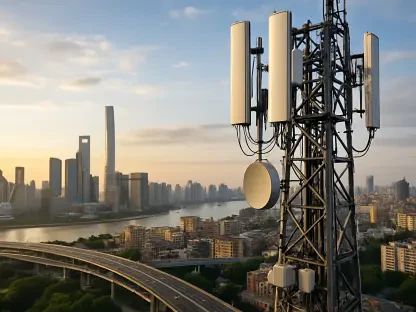

The sleek smartphone resting on a café table in a bustling city possesses a hidden capability that most users will never see until they cross the invisible threshold of a cellular dead zone. While tech giants dominate headlines with massive rocket launches and sprawling satellite constellations, a silent transformation is occurring within the hardware already sitting in your pocket. Modern flagship smartphones from Google and Samsung are now equipped to bypass traditional cell towers entirely when the signal bars vanish. This shift isn’t about adding bulky antennas or specialized gear; it is about Skylo’s “invisible” integration into the global telecommunications fabric. By turning standard consumer devices into satellite-ready tools, Skylo is fundamentally changing how we perceive coverage, moving us toward a world where the “No Service” notification becomes an artifact of the past.
This evolution marks a departure from the days when satellite phones were brick-sized luxuries reserved for offshore sailors or desert explorers. Today, the integration happens at the silicon level, meaning the average person carries a lifeline to the stars without even realizing it. The importance of this shift cannot be overstated, as it represents the first time in history that global, ubiquitous connectivity has been democratized through standard consumer electronics. Skylo acts as the connective tissue between the terrestrial world and the orbital one, ensuring that the transition between a local tower and a satellite 22,000 miles away is as seamless as switching between Wi-Fi and LTE.
Bridging the Dead Zones: A Utility for the Entire Planet
In our modern era, we treat connectivity as a utility as essential as water or electricity, yet terrestrial networks still leave over 80% of the Earth’s surface as digital dead zones. This gap is not just a nuisance for hikers or remote travelers; it is a critical failure for global logistics, emergency response, and industrial monitoring. When a natural disaster strikes or a logistics vessel enters a remote shipping lane, the absence of a signal can have life-altering consequences. Skylo addresses this by acting as a universal bridge between existing satellite infrastructure and standard cellular protocols, filling the holes that ground-based towers simply cannot reach.
Their approach moves the conversation away from proprietary, walled-garden satellite systems and toward a unified global standard that ensures safety and connectivity are accessible regardless of geography. By leveraging 3GPP standards, Skylo ensures that satellite access is treated as a natural extension of the mobile network. This means that instead of needing a separate subscription or specialized hardware, the user’s existing device understands how to talk to the sky. It effectively erases the boundaries of the traditional map, providing a safety net that covers oceans, mountains, and vast wilderness areas that were previously off the grid.
The Architecture of an Invisible Network: Strategy and Standardization
Unlike competitors spending billions to launch proprietary hardware, Skylo operates as a service layer that prioritizes efficiency and reach. By utilizing existing satellites from partners like Viasat and EchoStar, they avoid the massive capital expenditure and risks associated with space hardware ownership. This resource-light business model allows the company to focus entirely on the software and protocol integration that makes the connection possible. It is a strategy built on collaboration rather than conquest, turning potential rivals in the satellite space into essential infrastructure partners.
Skylo maintains a neutral, wholesale position, allowing mobile carriers to extend their reach into space without seeing the satellite provider as a competitor. This “Switzerland” of telecommunications strategy relies on standard roaming protocols, making satellite access look like just another roaming partner to a mobile phone. Moreover, Skylo is a cornerstone for the Internet of Things, certifying over 72 unique device SKUs—including modules and sensors. This provides the backbone for tracking assets in remote shipping lanes or monitoring infrastructure in deep wilderness, proving that the network is as much for machines as it is for people.
Industry Insights: Building the Standardized Sky
CEO Parthsarathi Trivedi frequently champions the concept of a “standardized sky,” a vision where connectivity is non-discriminatory and seamless. Industry experts note that Skylo’s strength lies in its deep integration with chipset manufacturers like Qualcomm, MediaTek, and Samsung. By embedding Skylo’s technology at the silicon level, the company ensures that satellite capability is a default feature rather than an expensive add-on. This collaborative ecosystem approach has allowed Skylo to establish more than 20 carrier operator interfaces, creating a global network that operates behind the scenes to provide a consistent user experience.
The brilliance of this model is its scalability; as more manufacturers adopt these universal chipsets, the network grows without Skylo having to launch a single new rocket. This ecosystem-first mentality creates a virtuous cycle where carriers want to offer the service because the devices are already capable, and manufacturers want to include the tech because the carriers support it. The result is a unified front that presents a single, cohesive network to the end user, regardless of how many different satellites or towers are actually involved in moving the data.
From Ground to Space: Implementing a Seamless Connectivity Strategy
Manufacturers must align with specific chipset and module requirements to ensure “Skylo-certified” status, guaranteeing that the device can communicate with high-altitude satellites using standard protocols. This certification process is the gatekeeper for quality, ensuring that when a user triggers an emergency SOS or sends a remote text, the hardware performs reliably under pressure. Mobile Network Operators can then implement satellite coverage by treating Skylo as a roaming partner, allowing for a frictionless billing and service experience for the consumer.
The roadmap for this technology involves a transition to a multi-orbit framework to move beyond basic text messaging. Integrating Medium Earth Orbit and Low Earth Orbit satellites will eventually allow for voice calls and data-heavy applications, effectively bringing 5G speeds to the most remote corners of the planet. The ultimate goal for developers and engineers was to refine the handover process, ensuring the device switched from a terrestrial tower to a satellite automatically and invisibly. By focusing on the transparent transition between networks, the industry moved toward a future where “coverage” is no longer defined by the nearest tower, but by the open sky above. This shift necessitated a global rethink of how spectrum is managed and how devices are authenticated, laying the groundwork for a truly borderless digital existence.