
In a world where high-speed internet is as essential as electricity and water, millions of people still find themselves on the wrong side of a persistent digital divide, unable to fully participate in modern education, commerce, and healthcare. New York State is aggressively confronting this challenge with a comprehensive, state-led strategy designed to ensure universal broadband access for all its residents. At the direction of Governor Kathy Hochul, the ConnectALL initiative is spearheading this effort, and its renewed focus on empowering local governments through the Municipal Infrastructure Program (MIP) signals a pivotal moment in the state’s campaign. The overarching goal is to leverage a combination of public-private partnerships and significant state and federal funding to construct a more equitable digital future. A core tenet of this approach is the creation of “open-access” and publicly controlled infrastructure, a model intended to foster greater competition among service providers and secure long-term affordability and accessibility for every New Yorker, from remote rural areas to underserved urban neighborhoods.
Empowering Localities Through the Municipal Infrastructure Program
Governor Hochul recently announced a new funding round for the Municipal Infrastructure Program, injecting up to $36 million into new broadband projects designed to close critical service gaps. Managed by ConnectALL, the state’s dedicated broadband office, the program is tailored to assist municipalities in building the infrastructure needed to connect communities that have long been overlooked by private internet service providers. To ensure a swift and responsive process, applications are now being accepted on a rolling basis through April 30, with the official review of proposals set to begin on February 2. In alignment with federal funding stipulations, all projects supported by this new round of grants must be substantially completed by the end of 2026. To maximize the program’s reach and impact, individual grant awards are expected to be capped at under $10 million each, a strategy that allows for a broader distribution of funds across a diverse range of projects throughout the state, ensuring no community is left behind in the push for universal connectivity.
This new funding injection builds upon the Municipal Infrastructure Program’s already substantial track record of success and demonstrates a continued commitment to a proven model. To date, the MIP has channeled an impressive $268 million into active projects spanning 24 counties, a significant investment that is already yielding tangible results. This existing funding is facilitating the construction of over 2,300 miles of new fiber optic lines and the establishment of 68 new wireless hubs. Together, these infrastructure enhancements are projected to bring reliable, high-speed internet access to more than 96,000 homes and businesses that were previously unserved or underserved. The program is primarily supported by the U.S. Department of the Treasury’s Capital Projects Fund, established under the American Rescue Plan. Its design emphasizes flexibility, enabling it to support a variety of municipal broadband models and foster effective public-private collaborations to deliver high-quality, affordable service options to New Yorkers across the state.
Building the Network from the Ground Up
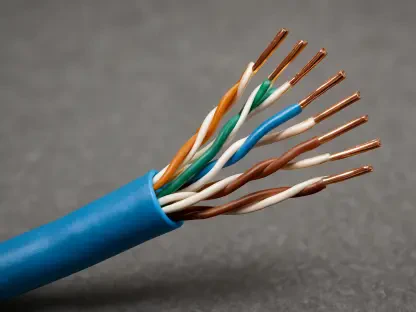
A primary focus of the MIP grant funding is the deployment of “last mile” infrastructure, which constitutes the final, critical segment of the network that physically connects to a user’s home or business. The program’s guidelines detail how funds can be used for essential materials and labor, including the cabling and wires necessary to distribute internet service from local hubs to individual properties. It also covers crucial ancillary work, such as pole replacements and other “make-ready” tasks, as well as the radio equipment used for wireless distribution in areas where fiber is not feasible. Critically, the funding extends to the “drop” connection, which involves running a line from a street-level pole or conduit directly into a customer’s building. Beyond this, the program supports the development of “middle mile” infrastructure, the backbone connecting local networks to the global internet. Grants can fund the construction of fiber optic lines to link a community’s network to a regional Internet Exchange Point or data center, ensuring a robust and resilient connection for the entire area.
The Municipal Infrastructure Program is a vital component of Governor Hochul’s overarching, billion-dollar ConnectALL initiative, a statewide effort designed to fundamentally transform New York’s digital landscape. This ambitious strategy aims to invest more than $1 billion to enhance infrastructure, promote healthy competition among service providers, and guarantee that every resident has access to reliable and affordable high-speed internet. ConnectALL is not a single program but a suite of distinct yet interconnected efforts, each targeting a specific aspect of the digital divide. For instance, the $50 million Digital Equity Program addresses the human side of connectivity by improving digital literacy and job readiness skills, while the $100 million Affordable Housing Connectivity Program is dedicated to deploying new broadband infrastructure directly to residents of affordable and public housing. Other key components include a program to extend service to unserved locations and the creation of the Excelsior Broadband Network, a major public works project creating a new statewide public fiber optic line along the New York Thruway.
A Blueprint for a Connected Future
Through these deliberate and interconnected initiatives, New York State established a powerful blueprint for digital equity that went beyond simply funding infrastructure projects. The strategy recognized that true connectivity required a multi-faceted approach, one that addressed affordability, digital literacy, and access to devices in tandem with the physical construction of networks. Programs like the Digital Equity Program and the Affordable Housing Connectivity Program ensured that the benefits of new infrastructure reached the most vulnerable populations. By empowering municipalities with the resources and flexibility to pursue local solutions, the state fostered a new era of public-private partnerships tailored to community-specific needs. This comprehensive vision, which integrated last-mile construction with middle-mile reinforcement and innovative service models, ultimately transformed the state’s digital landscape and created a sustainable framework for long-term growth and opportunity for all its residents.