
The 2026 Telecom Pivot: Beyond Connectivity to Cognitive Infrastructure
The global telecommunications industry is currently undergoing a radical metamorphosis as the traditional reliance on physical cables gives way to an era of cognitive, self-optimizing networks. This dual-speed market is balancing the expensive decommissioning of legacy copper infrastructure with the urgent deployment of next-generation intelligence. As of early 2026, the baseline for survival in the sector has shifted toward a convergence of high-capacity fiber, private 5G, and generative artificial intelligence.
Modern operators are no longer merely providers of data pipes; they are becoming architects of an intelligent ecosystem. While Europe manages the “Great Copper Switch-Off,” other regions are experiencing a different kind of revolution centered on accessibility and industrial precision. In Africa, the democratization of smartphones is reshaping digital inclusion, whereas in Western industrial hubs, the rise of autonomous agents is redefining the factory floor. This landscape represents a fundamental shift where connectivity is an active participant in global economic growth.
The Fractured Migration to All-Fiber Ecosystems
The European Divide: Leaders, Laggards, and the Copper Sunset
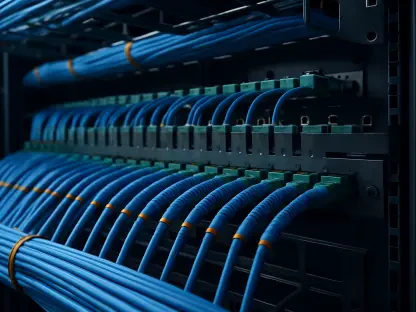
The contrast between digital frontrunners and legacy-bound nations has never been more apparent than in the current European fiber rollout. Countries like Spain and Norway have effectively completed their migration to fiber-to-the-home, allowing them to retire old copper networks and reduce operational costs. In contrast, major economies like Germany remain heavily dependent on legacy infrastructure, with a vast majority of the footprint still awaiting modern upgrades.
This disparity is exacerbated by a lack of unified European Union regulation regarding the sunset of copper services. Without legally binding deadlines, the transition relies on voluntary targets set by individual operators, creating a fragmented patchwork of connectivity speeds. This delay poses a significant competitive risk, as maintaining dual networks drains capital expenditure that could otherwise be diverted toward 5G densification and green energy initiatives.
Intelligence at the Edge: Generative AI as the New Operating System
Artificial intelligence has transitioned from simple chatbots to sophisticated AI Agent Management Platforms that drive the core of customer relations. In high-volume sectors like insurance and tourism, these platforms now handle complex voice-based dialogs with human-like precision, operating around the clock. This shift allows human employees to focus on high-level escalations while automated systems manage the bulk of routine technical support and sales inquiries.
In Central and Southeastern Europe, modular conversational platforms are successfully bridging linguistic and regional gaps. By integrating advanced voice and text models, operators are streamlining communication across diverse markets with localized nuances. This move signals a change in operational philosophy where AI is not a peripheral support tool but the central nervous system of the customer lifecycle, ensuring consistency and speed that were previously impossible to achieve.
Queryable Infrastructure: Simplifying the Industrial Frontier
The synthesis of private 5G and edge computing has birthed the concept of queryable infrastructure within the industrial sector. In warehouses and factories, complex software dashboards are being replaced by natural language processing interfaces that allow staff to “talk” to their machinery. Workers can now request real-time technical data or status updates using simple voice commands, making the most advanced technical insights accessible to non-technical personnel on the floor.
However, this transition to automated monitoring brings a new set of security and reliability challenges. Delegating critical industrial monitoring to automated voice and text bots requires robust localized language models that can operate securely without constant cloud connectivity. Ensuring these systems remain resilient against interference while maintaining low latency is the current priority for operators seeking to dominate the high-stakes industrial 5G market.
Global Expansion Dynamics: Emerging Markets and Infrastructure Densification
The digital transition is moving at an incredible pace in emerging markets, particularly across Africa, where smartphone adoption has surged by double digits. This boom is fueled by the availability of sub-$100 devices that are replacing older feature phones, opening the door for millions to join the digital economy. These regional shifts demonstrate that growth in these markets follows a different trajectory, focused on entry-level digital access rather than high-end industrial automation.
Meanwhile, in developed markets like France, the focus has shifted toward urban network densification to satisfy the relentless demand for 5G data. Long-term tower agreements are being signed to deploy thousands of new sites, ensuring that the physical infrastructure can support the massive bandwidth requirements of modern applications. This densification is essential for maintaining service quality as more consumers and businesses migrate their primary operations to mobile-first environments.
Navigating the 2026 Landscape: Strategic Blueprints for Operators
The primary strategic imperative for operators today is the prioritization of the fiber transition to unlock the full potential of artificial intelligence. High-speed, low-latency backhaul is the prerequisite for running the sophisticated local models that define the current era of queryable infrastructure. Stakeholders must advocate for clearer regulatory frameworks that accelerate the decommissioning of legacy copper to free up the capital necessary for these software-driven network upgrades.
Furthermore, investment must be directed toward human-centric AI interfaces that reduce the friction between users and technology. Balancing physical site expansion with the need for network agility requires a mindset shift toward software-defined everything. By focusing on private 5G for industrial applications and entry-level digital tools for emerging markets, operators can build a resilient, multi-faceted growth strategy that spans across different economic realities.
The Synthesis of Intelligence and Infrastructure
The successful evolution from passive data pipes to active, cognitive networks defined the major milestones achieved throughout this period. Organizations that moved beyond connectivity to provide integrated intelligence found themselves at the forefront of the digital economy. The transition to fiber and the integration of localized AI models proved to be the decisive factors in determining market leadership across both Europe and Africa.
Moving forward, the success of autonomous logistics and AI-driven services will continue to define the industry for the next decade. The focus transitioned from merely building networks to ensuring those networks could perceive and respond to user needs in real-time. Strategists discovered that the future belonged to those who successfully bridged the gap between physical hardware and the limitless possibilities of localized artificial intelligence.