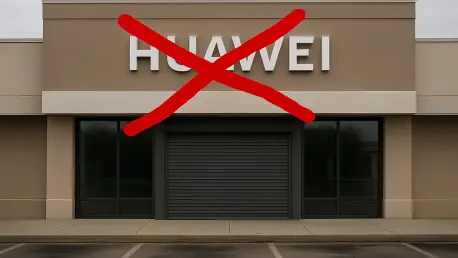

A dramatic, Tom Clancy-esque military raid to abduct Venezuela’s president from the heart of Caracas does more than just signal a shift in American foreign policy; it serves as a stark warning to any global power with significant interests in the Western Hemisphere. This bold intervention illustrates the core of a new, aggressive doctrine that could systematically dismantle the operations of Chinese tech giant Huawei from the bustling markets of Mexico City to the growing cloud data centers in Argentina. What was once a global campaign of diplomatic pressure against Huawei has morphed into a direct, regional confrontation, placing the company’s future in the Americas in profound jeopardy. This is not merely about telecommunications equipment anymore; it is about geopolitical dominance in America’s own backyard, and Huawei finds itself at the epicenter of this tectonic shift.
From Caracas to the Cloud How a Fictional Raid Signals a Real-World Tech War
The recent U.S. military action in Venezuela, real or symbolic, serves as the defining symbol of a profound strategic realignment. This is not just a projection of military strength but the opening salvo in a renewed and geographically focused tech war. Where the first Trump administration used diplomatic channels and sanctions to wage a global campaign against Chinese technology, the second term’s approach is far more direct and concentrated. The dramatic nature of the raid is designed to communicate an unambiguous message to regional governments and their commercial partners: U.S. interests in the Americas are paramount and will be enforced with decisive action.
This event has given rise to what is being termed the “Donroe Doctrine,” a modern interpretation of the historic Monroe Doctrine that reasserts American hegemony over the Western Hemisphere. This doctrine represents a pivot away from broad international engagement toward an intense, almost isolationist focus on its immediate sphere of influence. For Huawei, this shift transforms Latin America from a lucrative and relatively permissive market into the primary battleground in its long-running conflict with Washington. The rules of engagement have fundamentally changed, moving from persuasion and sanctions to overt coercion.
The Donroe Doctrine Americas Pivot to Its Own Backyard
The strategic calculus behind the Donroe Doctrine is rooted in a reevaluation of global priorities. Under this framework, Europe is viewed as a continent in “civilizational erasure,” offering limited strategic value beyond a few “Americanizing” tech companies like Ericsson and Nokia. Consequently, concerns over Russian expansionism are largely dismissed. Similarly, Asia’s long-held dominance in semiconductor manufacturing is seen as a waning threat as the United States aggressively pursues chip self-sufficiency through domestic fabrication plants. With its attention withdrawn from these traditional arenas, all of America’s geopolitical energy is now channeled southward.
This pivot is driven by a “strongman” approach to foreign policy, aimed at countering the significant economic presence of rivals, particularly China. Over the past two decades, China has become a major investor across Latin America, financing and building critical infrastructure, including strategic ports near the Panama Canal. From the perspective of the White House, Huawei’s deep integration into the region’s digital infrastructure is not just a commercial success but a dangerous extension of Chinese state influence. The Donroe Doctrine, therefore, aims to reassert U.S. dominance by directly challenging and aiming to displace this entrenched technological and economic presence.
Huawei’s Latin American Lifeline Under Direct Threat
During the first Trump term, Washington’s efforts to persuade European allies to ban Huawei from their 5G networks produced only “mixed results.” Many nations resisted the pressure, unwilling to bear the cost of excluding a major vendor. While U.S. sanctions did cripple Huawei’s consumer smartphone business, causing a 36% revenue drop in the EMEA region between 2019 and 2021, the company’s regional business has since recovered, growing to over 148 billion Chinese yuan by 2024. A similar recovery occurred in the Americas, where revenues rebounded to approximately 36 billion yuan in the same period. However, this Latin American lifeline is now directly in the crosshairs of a far more intolerant U.S. administration.
Furthermore, the nature of Washington’s security concerns has evolved significantly. Initial fears centered on the potential for espionage through Huawei’s 5G equipment have been eclipsed by a more urgent anxiety over China’s rapid advancements in artificial intelligence and cloud computing. In this new context, Huawei is viewed not merely as a telecom equipment provider but as a formidable competitor to American giants like Nvidia in the race for AI supremacy. Huawei’s successful diversification into cloud services across Latin America—with data centers and clients in Argentina, Brazil, Chile, and Mexico—represents a far more immediate threat in Washington’s eyes. While a limited Huawei 5G presence in distant European networks might be tolerated, a major Chinese AI and cloud provider operating so close to home is seen as wholly unacceptable.
Analyzing the Stakes Expert Research and Rival Reactions
Data from independent research firms underscores the tangible growth the U.S. now aims to reverse. Studies from Strand Consult have meticulously mapped Huawei’s expanding cloud footprint across Latin America, confirming its deep integration into the region’s digital economy. At the same time, data from Synergy Research, which tracks global cloud market share, provides context for this regional push, showing that while Huawei is a small global player, its targeted growth in developing markets has been substantial. The company’s cloud computing sales reflect this, surging from 37.2 billion yuan in 2021 to 68.8 billion yuan by 2024, with Latin America being a key contributor.
This U.S.-led pressure campaign creates a potential gold rush for Huawei’s European rivals, Ericsson and Nokia. Both companies have faced their own struggles, with Ericsson becoming heavily reliant on the U.S. market and Nokia losing ground in its 5G business. Nokia CEO Justin Hotard previously identified the replacement of Huawei equipment in Europe as a potential €2.5 billion opportunity, and a similar, if not larger, market could open up in Latin America. However, this analysis is tempered by a dose of skepticism regarding U.S. strategy. Citing America’s “dismal track record on regime change,” observers caution that an overly aggressive interventionist policy could easily backfire, creating a political quagmire rather than a stable, pro-U.S. bloc of nations.
Navigating the New Geopolitical Chessboard Strategic Implications
For governments and telecommunication operators across Latin America, the pressure to choose a side is becoming immense. They face a difficult decision: align with U.S. geopolitical objectives or continue leveraging affordable, high-quality, and deeply integrated Chinese technology. The operational and financial costs of a “rip and replace” mandate to remove existing Huawei infrastructure would be staggering, potentially delaying technological progress and raising consumer prices. This choice is not merely technical but profoundly political, forcing nations to weigh their economic realities against the risks of antagonizing a newly assertive northern neighbor.
For U.S. policymakers, the central challenge is to execute this containment strategy without destabilizing an entire region. Success will require more than just threats and ultimatums. It will depend on the ability to offer Latin American nations credible, affordable, and technologically competitive alternatives to what Huawei provides. Simply forcing a vacuum in the market is not enough; it must be filled with viable solutions backed by tangible U.S. financial and technological support. The ultimate test of the Donroe Doctrine will be whether it can build a new technological partnership in the Americas or simply dismantle the existing one, leaving the region fragmented and less secure.
The aggressive pivot in U.S. foreign policy has already reshaped the technological landscape of the Americas, placing Huawei’s future in the region in a state of unprecedented uncertainty. The unfolding events suggested that a new era of geopolitical competition had begun, one fought not on distant battlefields but within the critical digital infrastructure of neighboring nations. It became clear that for regional governments, technology providers, and U.S. policymakers alike, navigating this new reality required a delicate balance of political pragmatism and strategic foresight. The long-term consequences of this confrontation, for both regional stability and the global tech industry, were only just beginning to materialize.