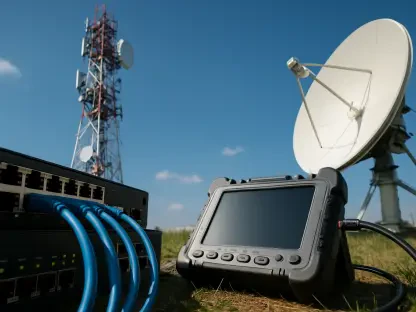

The rapid transformation of the European digital landscape is no longer merely a matter of faster consumer internet but a fundamental shift toward an industrialized, high-precision infrastructure that underpins every facet of modern economic life. As the region moves away from traditional connectivity models, the focus has pivoted to the creation of a robust digital frontier where mobile and fiber networks serve as the backbone for high-stakes industries. Neutral-host providers have emerged as central figures in this transition, facilitating regional development by managing shared infrastructure that supports multiple operators. This collaborative approach is vital for maintaining momentum in both urban hubs and underserved rural areas.
The intersection of telecommunications with strategic sectors like cloud computing and quantum mechanics is redefining the boundaries of what a network can achieve. Connectivity is no longer a siloed utility; it is now deeply integrated with high-precision positioning and autonomous systems. Regulatory philosophies in the United Kingdom and the European Union have played a decisive role in shaping this evolution, focusing on a delicate balance between fostering intense market competition and ensuring robust consumer protection. These frameworks aim to prevent monopolies while encouraging the massive capital injections required for next-generation hardware.
The Current State of European Connectivity and the Digital Frontier
The current European telecommunications landscape is characterized by an aggressive transition toward industrialized infrastructure. This shift is evident in the way major players in the mobile and fiber markets are moving beyond simple coverage targets to focus on the quality and resilience of their networks. The role of neutral-host providers has become increasingly significant, as they allow for the efficient rollout of services without the redundant costs associated with every operator building their own physical towers. This model has proven essential for regional development, ensuring that even remote areas gain access to high-capacity digital services.
Moreover, the convergence of telecom with strategic technologies such as cloud computing and quantum mechanics has created a new competitive arena. High-precision positioning, enabled by advanced network data, is now a prerequisite for the next wave of industrial automation. Regulatory bodies across the continent are navigating these complexities by implementing policies that prioritize both technological advancement and market stability. By focusing on fair access and long-term investment cycles, these regulators aim to build a digital ecosystem that can withstand global economic shifts while delivering consistent value to the public.
Emerging Trends and Economic Projections in Strategic Technology
Technological Shifts Shaping the Next Decade of Connectivity
The deployment of modular, pre-assembled mobile masts represents a significant “factory-first” shift in how infrastructure is delivered. By assembling antennas and radios in controlled environments rather than on-site, operators can ensure higher precision and reduce the impact of unpredictable weather conditions on construction timelines. This modular approach not only speeds up the rollout of 5G but also minimizes the disruption caused by traditional on-site wiring and installation processes. As this model becomes more widespread, it will likely set a new global standard for infrastructure efficiency and reliability.
In tandem with these hardware innovations, the evolution of geolocation technology is transforming the capabilities of mobile networks. Real-time kinematic technology now provides centimeter-level accuracy, which is a massive leap from the five-meter margin of error common in older systems. This precision is the catalyst for a new economy centered on autonomous drone logistics and smart city management. At the same time, the transition of high-speed fiber into a regulated public utility ensures that the general population remains connected to the essential digital services required for modern life, while the push for technological sovereignty seeks to reduce reliance on foreign hyperscalers.
Market Dynamics and Performance Indicators for the 2030 Horizon
The economic landscape is being reshaped by a significant two billion pound investment in quantum technology, which is expected to yield substantial returns for the national economy over the coming decade. This funding is directed toward the development of hardware and software that can solve problems currently beyond the reach of classical computers. Analysts are closely monitoring how these investments will translate into commercial applications, particularly in sectors like finance and cybersecurity. The goal is to establish a leadership position in a technology that will define the global power structures of the next generation.
Wholesale price caps continue to influence the long-term investment cycles of alternative network providers. By capping prices on mid-range broadband services, regulators have created a predictable environment that protects consumers while allowing for healthy competition in the ultra-fast fiber market. Data-driven outlooks suggest that the continued rollout of 5G infrastructure will eventually eliminate rural “not-spots,” creating a more equitable digital landscape. These performance indicators suggest that the strategy of balancing affordability with high-end innovation is successfully attracting the private capital needed to complete national network upgrades.
Overcoming Structural and Administrative Barriers to Progress
Progress is often hindered by the friction between national digital ambitions and localized planning laws that delay essential upgrades. While the central government pushes for rapid 5G deployment, local administrative processes can trap projects in years of bureaucratic review. Industry advocates are calling for streamlined regulations that treat modest alterations to existing sites with greater flexibility. Such changes would allow for faster equipment upgrades without the need for full-scale planning applications, accelerating the completion of the shared rural network and ensuring that connectivity goals are met on schedule.
Managing the logistical constraints of weather-dependent construction remains a persistent challenge for the industry. The move toward modular, factory-assembled infrastructure mitigates some of these risks, but the physical reality of site access and installation still poses hurdles. Furthermore, the risk of “sovereignty-washing” is a growing concern among policy experts. This occurs when foreign entities present themselves as domestic champions to bypass security scrutiny. Protecting domestic data and promoting homegrown European tech requires a vigilant approach to procurement and a clear definition of what constitutes a truly sovereign technology provider.
The Regulatory Framework and its Impact on Industry Stability
The recent telecoms access review by Ofcom has provided the industry with a crucial decade of price stability, specifically concerning the services provided by Openreach. This long-term certainty allows for more confident planning and investment from both the incumbent and its competitors. By ensuring fair access to physical infrastructure like poles and ducts, regulators have fostered a competitive ecosystem where smaller alternative networks can thrive. This approach prevents the waste of redundant construction and encourages providers to focus their resources on expanding their actual service footprints rather than legal battles over access.
In the broader European context, the Cloud and AI Development Act is beginning to influence how procurement and security standards are handled. This legislation is designed to ensure that the infrastructure supporting the continent’s most sensitive data is both secure and compliant with local standards. As quantum computing advances, the challenge of maintaining encryption and data security becomes even more acute. The regulatory framework must therefore remain agile, evolving to address new threats while providing a stable foundation for the businesses that rely on high-capacity, secure connectivity to operate globally.
Future Outlook: Quantum Ambitions and the Path to Tech Leadership
By the early 2030s, large-scale quantum computers are expected to revolutionize fields ranging from drug discovery to green energy production. These machines will have the capacity to simulate molecular interactions at an unprecedented scale, leading to breakthroughs that were previously thought impossible. For Europe and the UK, the success of these quantum ambitions will depend on the ability to integrate these systems into existing digital infrastructures. This will require not only the hardware itself but also a new generation of engineers and scientists capable of operating within this advanced technological paradigm.
The future of autonomous transportation and smart cities will be defined by the widespread adoption of centimeter-level positioning accuracy. This level of precision allows for the safe integration of drones and self-driving vehicles into urban environments, reducing congestion and improving logistics efficiency. Consumer preferences are also shifting, with a growing demand for ultra-reliable, low-latency connectivity over simple speed-based metrics. As the market matures, the ability to provide a consistent and ethical technological environment will become a primary differentiator for regions seeking to lead the global digital economy.
Strategic Recommendations for Achieving Technological Sovereignty
The analysis showed that a “stability through strategy” approach was the most effective way to manage the complex needs of the telecommunications sector. It was determined that policymakers had to prioritize the reduction of administrative friction by aligning local planning laws with national connectivity goals. This required a shift in focus toward modular infrastructure and pre-assembled components that bypassed many of the traditional delays associated with on-site construction. By streamlining these processes, the region maintained its competitive edge and ensured that the benefits of 5G and fiber were distributed more equitably across all geographic areas.
It was also found that bridging the gap between engineering innovation and administrative efficiency was vital for the successful deployment of quantum and cloud technologies. The report concluded that avoiding the pitfalls of sovereignty-washing required more stringent procurement standards and a clearer commitment to homegrown tech champions. Finally, the evidence suggested that Europe possessed the necessary components to lead the next generation of strategic technology, provided it continued to foster an environment where long-term investment was protected by predictable regulation. The path forward involved a deliberate integration of ethical standards and sovereign infrastructure to secure a dominant position in the global digital future.