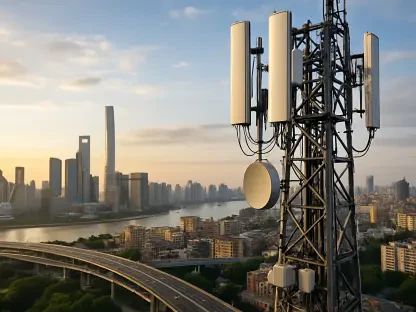

A major legal confrontation is unfolding within the telecommunications sector as infrastructure giant American Tower has initiated a lawsuit against Dish Wireless, escalating a significant disagreement over a multi-year tower rental agreement. Filed in a Colorado court, the lawsuit seeks a declaratory judgment that would compel Dish to honor the terms of its contract, which the mobile carrier has attempted to unilaterally terminate. This conflict underscores the immense financial commitments and complex dependencies that define the relationship between network operators and the tower companies that provide the essential backbone for wireless communication. The dispute places a spotlight on the contractual stability that underpins the rollout and maintenance of national 5G networks, raising questions about the long-term viability of agreements when a carrier’s strategic direction undergoes a fundamental shift. American Tower is contending that the agreement remains fully binding and is seeking to recover all remaining rent owed under the deal’s term.
A Dispute Over “Force Majeure” Claims
The crux of Dish’s defense hinges on the invocation of a “force majeure” clause, a contractual provision that excuses a party from its obligations due to unforeseeable circumstances beyond its control. Dish asserts that such an event occurred when its parent company, EchoStar, was allegedly “forced” to sell critical spectrum assets to competitors AT&T and SpaceX. According to Dish, this divestiture was not a voluntary business decision but a direct consequence of an FCC investigation into EchoStar’s adherence to its 5G network buildout obligations and its spectrum license rights. The company argues that the regulatory pressure and the subsequent sale of assets fundamentally altered its operational capabilities, thereby triggering the force majeure clause and nullifying its rental obligations to American Tower. EchoStar itself communicated to the FCC that “severe uncertainty” stemming from the now-dropped investigation was the primary catalyst for the sales, a point Dish is leveraging to frame the situation as an external, coercive event rather than a strategic maneuver.
A Wider Conflict and Strategic Shifts
American Tower vehemently rejected Dish’s characterization of the events, arguing that the contract remained in full force and effect. The tower company portrayed EchoStar’s $40 billion spectrum sale not as a compelled action but as a “strategic and voluntary business judgement” made to navigate its financial and regulatory landscape. Evidence of a broader strategy by Dish emerged as this was not an isolated incident. Another major tower owner, Crown Castle, had already filed a nearly identical lawsuit, indicating a wider, systemic conflict between Dish and its key infrastructure partners. In that separate but related case, Dish’s legal tactics signaled a desire for a protracted battle, as it requested a lengthy extension until January 2026 simply to file its initial response. This pattern of legal disputes underscored a significant strategic pivot for Dish. The company had shifted its focus toward a future where its Boost Mobile brand would operate as a hybrid Mobile Network Operator (MNO), relying heavily on AT&T’s established network and thereby reducing its own need for the extensive tower infrastructure it had previously contracted for.