
The very fabric of the modern enterprise has been rewoven into a complex tapestry of dynamic collaboration, digital integration, and geographic dispersion, stretching far beyond the confines of a traditional office. As businesses expand their operations into temporary pop-up stores, deploy community-based healthcare through wearable technology, and optimize building management with vast networks of Internet of Things (IoT) devices, their reliance on seamless connectivity has become absolute. This evolution has exposed a critical vulnerability: the foundational, fiber-based network infrastructures that once powered productivity are now struggling to support the agile, data-intensive demands of this new era. The resulting gap between what businesses need and what their technology can deliver is not just an inconvenience; it represents a fundamental barrier to growth, innovation, and competitiveness in an increasingly connected world.
The Breaking Point of Traditional Connectivity
Legacy Networks Under Pressure
The strain on traditional, fiber-based Wi-Fi has become a critical issue for modern businesses, evolving from a minor annoyance into a significant operational bottleneck. In today’s densely populated and device-heavy work environments, these legacy systems are frequently pushed beyond their limits. Recent industry analysis reveals a startling reality: nearly half of all European enterprises report persistent connectivity problems, citing issues that stem directly from the increased density of users and devices within their office spaces. The consequences of this network instability are far-reaching and deeply impactful. Lagging video conferences, slow file transfers, and unreliable access to cloud-based applications directly translate into lost productivity and mounting employee frustration. This dissatisfaction has a tangible effect on talent retention, with a notable 23 percent of companies admitting they have lost top-tier employees specifically because of these persistent connectivity issues, highlighting that a reliable network is no longer a perk but a core expectation for a functional work environment.
Furthermore, the path to upgrading this aging infrastructure is fraught with significant financial and logistical hurdles that deter many organizations from taking necessary action. The process of retrofitting an existing building with new fiber-optic cables is inherently disruptive, often requiring extensive physical installation that involves significant downtime for business operations. This technological inertia is compounded by the high costs associated with both the materials and the specialized labor required for such an overhaul. As a result, many businesses find themselves in a state of paralysis, unable to justify the immediate disruption and expense of a full-scale upgrade, yet simultaneously suffering the consequences of an underperforming network. This situation creates a vicious cycle where the inability to invest in foundational infrastructure prevents the adoption of more advanced, efficiency-driving technologies, effectively trapping companies in a state of technological stagnation while their more agile competitors move forward.
A Barrier to Innovation
This technological gridlock extends far beyond daily operational frustrations, creating a formidable barrier to the adoption of transformative technologies that are defining the future of industry. Innovations such as the Internet of Things (IoT), Artificial Intelligence (AI), and digital twins are fundamentally dependent on a network’s ability to handle massive volumes of data with high bandwidth and ultra-low latency—capabilities that most legacy Wi-Fi systems simply cannot provide. For instance, a smart factory aiming to use a digital twin to mirror its operations in real-time would require a constant, high-speed data stream from thousands of sensors, a load that would overwhelm a traditional network. Similarly, deploying large-scale IoT networks for smart building management, which could automatically adjust lighting and climate control to conserve energy, becomes impractical without a network designed for massive device connectivity. Consequently, businesses are unable to harness the full potential of these innovations, leaving significant opportunities for cost savings, efficiency gains, and operational improvements untapped.
The inability to upgrade foundational connectivity actively stifles a company’s competitive edge and its capacity for future growth. Without the robust data pipeline needed to support next-generation applications, organizations are prevented from leveraging the deep insights that AI can derive from real-time operational data or implementing predictive maintenance systems that can prevent costly equipment failures before they occur. This technological deficit means that strategic decisions are often based on outdated or incomplete information, and the potential for creating smarter, safer, and more efficient work environments remains unrealized. In an economic landscape where data-driven agility is paramount, clinging to outdated network infrastructure is no longer a passive choice but an active decision to fall behind, limiting a company’s ability to innovate, adapt, and compete effectively in a digital-first world.
The 5G Revolution a New Foundation for Work
Unlocking Next-Generation Technologies
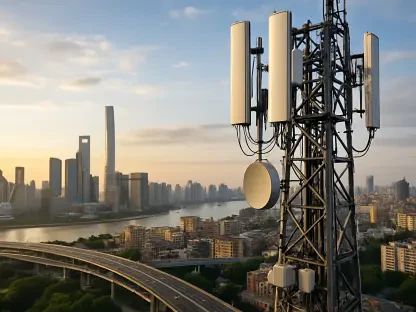
In response to the limitations of legacy systems, 5G cellular technology has emerged as the clear and definitive solution, offering a new foundation built for the intense demands of the modern enterprise. Its inherent attributes—unprecedented high speeds, ultra-low latency, and the capacity for massive scalability—provide the essential ingredients for the next wave of business innovation. Unlike traditional Wi-Fi, 5G is engineered to manage the immense and continuous flow of data generated by large-scale IoT deployments without compromising performance. This capability unlocks a host of practical, value-adding applications that were previously infeasible. For example, it enables the creation of truly smart office buildings where systems automatically adjust lighting and heating based on real-time occupancy data to dramatically reduce energy consumption. In industrial settings, 5G allows factories to monitor thousands of machines simultaneously, feeding data to predictive maintenance platforms that can anticipate failures, minimize costly downtime, and optimize production schedules with unparalleled precision.
The synergy between 5G and Artificial Intelligence is particularly powerful, creating a symbiotic relationship where each technology amplifies the potential of the other. While an overwhelming majority of businesses recognize AI’s potential to automate complex network analysis and reduce IT workloads, an almost equal number—84 percent—agree that 5G is the critical enabler needed to optimize AI’s performance. This consensus stems from the understanding that AI algorithms, especially those operating at the network edge for real-time decision-making, require a fast and reliable data pipeline to function effectively. 5G provides this crucial link, ensuring that data from countless sensors and devices can be collected and processed with minimal delay. As a result, the return on investment in AI is significantly enhanced, as the robust connectivity of 5G ensures that these intelligent systems have the high-quality, low-latency data they need to deliver accurate insights and drive meaningful business outcomes.
Empowering a Flexible and Mobile Workforce
Beyond its role in enabling new technologies, 5G cellular connectivity is the key to successfully empowering a geographically dispersed and increasingly mobile workforce. In the current era of prevalent remote and hybrid work models, 5G offers a level of performance consistency, enhanced security, and centralized control that is simply unattainable when organizations rely on their employees’ variable home internet connections or insecure public Wi-Fi hotspots. This dependable connectivity is crucial for facilitating seamless, real-time collaboration across different offices, homes, and even countries. It ensures that data-intensive applications, from high-definition video conferencing to complex, cloud-based project management tools, operate without the frustrating lag and interruptions that hinder productivity. Moreover, it opens the door to more immersive and effective collaborative experiences, such as virtual reality (VR) meetings and augmented reality (AR) training sessions, which demand the sustained, low-latency connection that 5G provides.
The power of 5G extends far beyond the traditional office or home-based worker, fundamentally transforming how businesses operate in mobile environments. The retail sector, for instance, is increasingly leveraging mobile kiosks and temporary pop-up shops, which depend entirely on a reliable wireless WAN and 5G for secure payment processing, inventory management, and customer engagement. In logistics and transportation, 5G is revolutionizing fleet management. Vehicles equipped with 5G connectivity can transmit real-time telematics and diagnostic data, allowing for instantaneous identification of breakdown locations and mechanical issues. This capability dramatically improves emergency response times, streamlines repairs, and enables predictive maintenance, ultimately reducing downtime and improving operational efficiency. In these and many other sectors, 5G is proving to be the essential infrastructure that allows businesses to break free from fixed locations and operate with greater agility and resilience.
A New Blueprint for Business Success
The strategic pivot toward cellular connectivity marked a turning point for modern organizations. The recognition that reliable, high-performance connectivity had transcended its role as a business amenity to become a utility as fundamental as electricity or water prompted a significant reevaluation of IT infrastructure. The choice to invest in 5G was no longer viewed as a simple network upgrade but as a foundational business decision that unlocked a new realm of operational possibilities. This strategic adoption laid a robust groundwork for building smarter, safer, and more efficient work environments capable of thriving in a digital-first world. By embracing this transformative platform, enterprises equipped themselves to fully harness the power of data-driven technologies like IoT and AI, empower a truly flexible and mobile workforce, and ultimately sharpen their overall competitive edge. The investment in 5G proved to be the definitive blueprint for future success, redefining the art of the possible in both physical and digital workspaces.