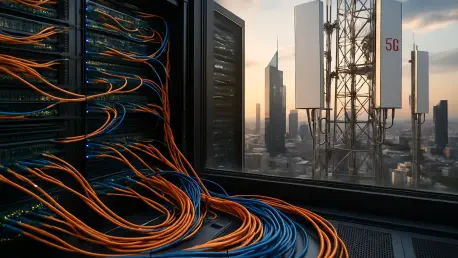

The torrent of data generated by billions of connected devices has created a fundamental challenge for artificial intelligence, pushing computation away from distant cloud data centers and directly into the world around us. This seismic shift from centralized processing to distributed intelligence is redefining the infrastructure needs of the modern enterprise. In this new landscape, where real-time decisions are paramount, Verizon is strategically positioning its vast physical network not merely as a conduit for data but as the foundational nervous system for the next wave of AI applications. The company’s argument is clear: the future of AI will be built on high-capacity fiber and ubiquitous 5G connectivity at the network’s edge.
This vision hinges on a critical distinction in the world of artificial intelligence: the difference between training and inference. While the development and training of AI models still require the immense power of centralized hyperscale data centers, their practical application—the process of inference—demands proximity to the source of data. For industries relying on immediate insights from robotics, IoT sensors, and autonomous systems, sending data to a far-off cloud and waiting for a response is simply not viable. The infrastructure supporting these use cases must be localized, resilient, and capable of handling massive throughput with minimal delay, a challenge Verizon aims to solve by leveraging its extensive terrestrial assets.
Learning From the Past Why Todays AI Boom Is Different
The rapid escalation in infrastructure spending to support AI has drawn inevitable comparisons to the speculative frenzy of the late 1990s, when a glut of dark fiber led to the dot-com collapse. However, industry leaders argue that the parallels are superficial. The key distinction lies in the nature of the investment. Unlike the previous era’s “build it and they will come” philosophy, today’s network expansion is anchored in tangible, immediate customer demand.
Jeffrey Hulse, president of network and partner solutions at Verizon Business, emphasized that the current environment is fundamentally “not built on spec.” The company’s infrastructure deployments are directly tied to specific enterprise clients who are already paying for high-capacity services to power their AI and data-intensive operations. This demand-driven approach mitigates the financial risks associated with overbuilding and ensures that new network assets are productive from day one, transforming the investment from a speculative gamble into a calculated response to a clear market need.
This perspective is echoed across the technology sector. At a recent industry panel, experts from firms like AlixPartners and Nvidia reinforced the idea that the convergence of AI, IoT, and advanced networking is creating practical, high-value use cases that justify the infrastructure investment. The consensus is that AI is poised to “hyper-scale” the Internet of Things, finally providing the intelligence needed to make sense of the vast amounts of data collected by connected devices in factories, cities, and supply chains.
The New Frontier AI’s Shift to the Edge
The effectiveness of modern AI hinges on its ability to interact with the physical world in real time, a requirement that has pushed processing power outward from the centralized cloud to the metropolitan and enterprise edge. This frontier is where data is generated and where instantaneous decisions are critical. For applications like industrial automation, smart logistics, or autonomous vehicle coordination, latency is not just an inconvenience; it is a critical point of failure. The need for high-speed computation at the edge is therefore not an architectural preference but a functional necessity.
This distributed model requires a new kind of connectivity fabric, one that can seamlessly link thousands of on-premise sensors and machines to local processing hubs. These edge computers, equipped with powerful GPUs, act as localized brains, running inference models to analyze data streams from video cameras, robotic arms, and environmental sensors. The output of this local processing enables immediate action, such as adjusting a manufacturing process or rerouting a delivery drone, creating a tight feedback loop between the digital and physical realms.
Industries are rapidly adopting this architecture to drive efficiency and innovation. In a smart factory, for instance, an AI model at the edge can perform real-time quality control by analyzing video feeds from the assembly line, detecting defects far faster and more accurately than human inspectors. Similarly, in retail, on-premise AI can manage inventory, analyze customer traffic patterns, and personalize in-store experiences. These applications are not theoretical; they represent a tangible demand for a network that can connect a dense ecosystem of devices to powerful local computing resources.
Verizon’s Twin Pillars Dense Fiber and Private 5G
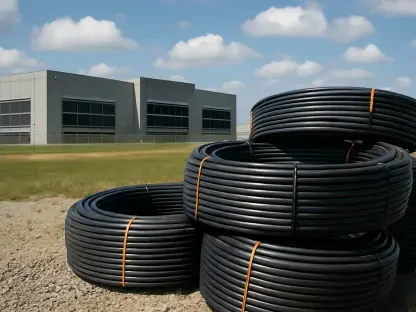
At the heart of Verizon’s strategy are two complementary infrastructure assets: its dense metropolitan fiber network and its on-premise private 5G solutions. The foundation is the company’s multi-billion-dollar “One Fiber” initiative, an aggressive project started nearly a decade ago to densify its fiber footprint across 69 major U.S. cities. This effort has involved upgrading key routes from legacy 12-fiber cables to massive 1,600-fiber cables, creating an enormous reservoir of data capacity.
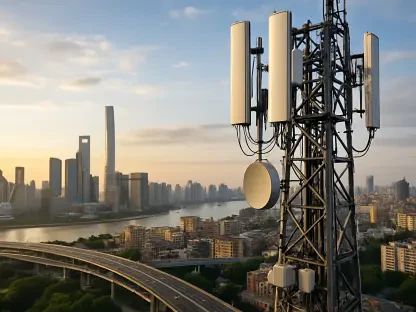
Initially conceived to provide high-speed backhaul for its own mobile cell sites—bringing 51% of its towers “on-net” for enhanced control and performance—this massive sunk investment is now being repurposed. Verizon is strategically splicing into this pre-existing, high-count fiber to deliver high-capacity services directly to enterprise customers. This gives the company a significant competitive advantage, allowing it to rapidly deploy the multi-gigabit connections needed for metro-edge AI workloads without the cost and delay of building new routes from scratch.
While fiber provides the high-capacity backbone, private 5G delivers the crucial final-mile connectivity within the enterprise itself. Acting as a high-bandwidth, low-latency wireless “nervous system,” private 5G connects the vast array of IoT sensors, cameras, and machines on a factory floor, in a warehouse, or across a campus. This private network funnels data to on-premise edge computers for local AI processing, creating a complete, end-to-end solution. This synthesis of a robust metro fiber network and tailored on-premise wireless connectivity is the core of Verizon’s value proposition for the AI-driven enterprise.
A Demand-Driven Approach Validating the Strategy
The confidence in this strategy is rooted in its direct alignment with observable market forces. The deployment of both fiber and private 5G is not speculative but is instead a direct response to contracts and commitments from enterprise clients. This methodical, demand-driven build-out ensures that capital is deployed efficiently and that the resulting infrastructure generates immediate returns, a stark contrast to the fiber overbuild of the past.
This targeted investment model allows Verizon to build partnerships with enterprises that are actively integrating AI into their core operations. By working directly with these clients, the company gains deep insight into the specific networking requirements of high-value use cases, from industrial robotics to automated supply chains. This collaborative approach ensures that the network architecture is precisely engineered to meet the performance demands of real-world AI applications.
The Strategic Framework for AI Edge Dominance
Verizon’s blueprint for leadership in the AI edge market follows a clear, three-step logic. The first step is to capitalize on its existing, deeply embedded fiber assets. By leveraging the “One Fiber” network, the company can rapidly provision high-speed services to enterprise locations situated near its existing routes, significantly reducing deployment time and cost. This allows Verizon to be agile and responsive to the burgeoning demand for AI-ready infrastructure.
The second step involves engineering a converged connectivity fabric that marries the strength of its metro fiber with the flexibility of private 5G. This integrated solution provides a seamless, high-performance path for data to travel from an IoT sensor on a factory floor, across the private wireless network to an on-premise edge server, and then back out through the fiber backbone to the wider world. This holistic approach removes networking bottlenecks and provides the end-to-end performance guarantees that critical AI applications require.
Finally, the strategy is focused on targeting high-value enterprise use cases where the synthesis of AI, IoT, and advanced networking creates clear and demonstrable business value. Rather than offering a one-size-fits-all solution, Verizon is concentrating on sectors like manufacturing, logistics, and public services, where real-time inference can drive significant gains in efficiency, safety, and productivity. This focus ensures that its technological capabilities are applied to solve concrete business problems, solidifying its role as an essential enabler of the enterprise AI revolution.
The narrative that emerged was one of strategic foresight, where a decade-long investment in network ownership and densification inadvertently prepared the company for the AI revolution. By combining its unmatched fiber depth in major U.S. cities with tailored private 5G solutions, Verizon positioned itself not just as a provider of bandwidth but as a critical architect of the distributed, high-performance connectivity fabric required for real-time AI. This approach signaled a transformation of a massive infrastructure investment into a leading-edge competitive advantage, built not on speculation but on the concrete demands of the modern enterprise.