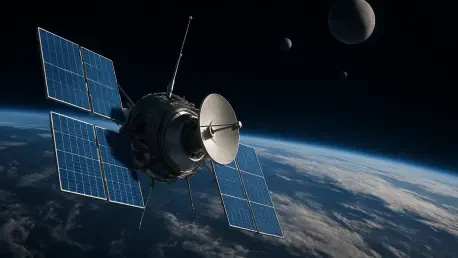

Ships navigating the furthest reaches of the Pacific and sensors embedded in the dense foliage of the Amazon now share a commonality once thought impossible: persistent, unbreakable communication. The digital landscape has transitioned into a phase where “dead zones” are effectively becoming a relic of the past as global industries demand constant connectivity for billions of assets. As terrestrial networks face physical bottlenecks, multi-orbit satellite IoT—the fusion of Geostationary (GEO) and Low Earth Orbit (LEO) satellites with existing cellular grids—has emerged as the definitive solution. This convergence allows for a seamless, “always-on” ecosystem that serves the next generation of the Internet of Things across every square inch of the planet.
The Convergence of Terrestrial and Non-Terrestrial Networks
Market Evolution: The Rise of Hybrid Connectivity
The satellite IoT market is shifting from niche experimentation toward a mainstream standard, catalyzed by the maturation of Non-Terrestrial Network (NTN) protocols. Global providers no longer view cellular towers as the sole pillars of connectivity; instead, they are integrating Narrowband IoT (NB-IoT) and LTE-M signals that can transition between terrestrial stations and orbiting hardware. This movement is accelerated by the decreasing cost of satellite deployment and a critical industrial need for data redundancy in high-stakes environments.
Bridging the Gap: Real-World Applications and Early Adopters
Practical implementations are already resolving complex logistical hurdles that once stymied remote operations. In the maritime sector, tracking firms like EMA utilize these hybrid networks to ensure vessels remain visible even when they are thousands of miles from the nearest coastline. Similarly, infrastructure managers such as Datakorum employ this technology to monitor energy grids located in uninhabited wilderness. By utilizing GEO coverage for breadth and LEO constellations for lower latency, these organizations achieve near-perfect uptime in regions previously considered unreachable.
Industry Perspectives on Multi-Orbit Integration
Telecommunications leaders like Deutsche Telekom have pioneered a vision where satellite layers function not as competitors to mobile networks, but as essential roaming extensions. This architecture prioritizes “Direct-to-Device” capability, which many experts consider the definitive breakthrough for mass adoption because it eliminates the need for specialized, bulky hardware. However, the true complexity lies in the backend orchestration—specifically, managing the handovers between fast-moving LEO satellites and fixed terrestrial towers without draining the battery life of small sensors.
The Future of Global IoT Connectivity
Anticipated Developments: Technological Shifts
Technological progress is pushing toward an era of “intelligent switching,” where devices autonomously select the most efficient data path based on power levels and urgency. The integration of high-bandwidth services, such as enhanced NTN Direct offerings, is democratizing data access for remote sensors used in precision agriculture and environmental monitoring. While these advancements offer transformative potential for disaster response, the industry still faces significant administrative challenges, including the management of orbital debris and the harmonization of international frequency licenses.
Long-Term Impact: Global Industry
As this technology becomes the standard architecture for the global supply chain, the distinction between “satellite” and “cellular” will likely vanish. Companies will gain the ability to monitor assets across continents and oceans with a unified data fabric, significantly reducing operational waste and enhancing security protocols. This pervasive connectivity will eventually support a wide range of autonomous systems, from forest fire detection networks to remote mining machinery, creating a more responsive and efficient global economy.
A New ErUniversal Access
The shift toward multi-orbit satellite IoT moved beyond theoretical planning and became a foundational requirement for any enterprise operating on a global scale. Organizations that prioritized early integration found themselves better equipped to handle the complexities of decentralized asset management. The industry addressed initial hardware limitations by standardizing protocols, which allowed businesses to focus on data analytics rather than connectivity gaps. Moving forward, the strategic focus shifted toward optimizing energy efficiency and refining the security of space-based data transmissions to protect critical infrastructure from emerging cyber threats.