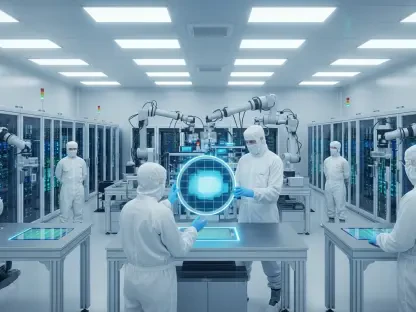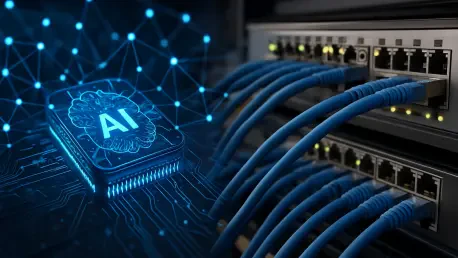

Digital infrastructure is no longer a silent backbone but a living entity that must think, breathe, and repair itself to survive the weight of global data consumption. Telecommunications providers currently face a brutal paradox where data demand is skyrocketing, yet revenue remains frustratingly stagnant. This connectivity trap forced companies like Telefónica to reconsider their fundamental operations, moving beyond manual management toward autonomous intelligence. By transforming passive infrastructure into a self-healing system, the company aimed to thrive in a hyper-connected digital economy where reliability became the ultimate currency.
Escaping the Connectivity Trap With Autonomous Intelligence
The transition toward autonomous systems is no longer a luxury but a necessity for survival in a saturated market. For years, the sector struggled with the rising costs of maintaining legacy systems while customers demanded more bandwidth for lower prices. Autonomous intelligence offered a way out by optimizing resource allocation in real time, effectively decoupling growth from operational expenditure. This shift ensured that the network could adapt to traffic spikes without requiring constant human intervention.
Implementing these intelligent layers allowed for a proactive approach to network health. Instead of waiting for a component to fail, the system predicted vulnerabilities and rerouted traffic to prevent outages. This level of sophistication redefined the relationship between the provider and the subscriber, offering a seamless experience that was previously impossible under manual oversight.
Why Traditional Network Models Are No Longer Sufficient
Traditional network models were designed for a predictable era that has long since passed. Modern high-speed traffic, driven by cloud computing and real-time data streaming, created bottlenecks that legacy architectures simply could not handle. These older systems relied heavily on manual configuration, which increased the risk of human error and slowed down the deployment of new services.
Software-defined networking (SDN) emerged as the solution to these rigid structures by separating the control plane from the physical hardware. This transition allowed Telefónica to adopt a tech-centric enterprise model, prioritizing agility and scalability. By moving away from a service-provider mindset, the organization gained the flexibility to manage complex workloads that define the current digital landscape.
The Technical Architecture of the Autonomous Network Journey
The roadmap toward Level 4 network autonomy by 2030 is built on a foundation of open interfaces and hardware disaggregation. This modular approach allows the company to integrate best-of-breed components from various vendors, fostering an environment of continuous innovation. Digital twins now play a critical role, providing a virtual replica of the network to test scenarios and perform automated root cause analysis before issues affect the physical layer.
Privacy remains a cornerstone of this technical evolution, particularly as AI becomes more deeply embedded in daily operations. Federated learning was utilized to balance the need for intelligent data processing with strict privacy standards. This method allowed the AI to learn from distributed data sources without ever exposing sensitive user information, maintaining trust while enhancing system capabilities.
Hardware Evolution and the Drive Toward 400G Backbones
Technical intelligence must be supported by robust physical infrastructure to be effective. Chief Technology Officer Cayetano Carbajo Martin spearheaded a comprehensive transport network overhaul to accommodate the surge in AI-driven demands. The strategy involved upgrading the backbone to 400G and the backhaul to 100G, ensuring that the data highway could support the next generation of digital services.
A pivotal part of this modernization was the transition to Integrated Packet over Dense Wavelength Division Multiplexing (IPoDWDM). By 2027, the company projected that 60% of its optical capacity would utilize advanced coherent pluggable optics. This integration reduced the need for bulky, external equipment, significantly lowering power consumption and physical footprint while maximizing total bandwidth efficiency.
Overcoming Operational Barriers to Full-Scale Integration
Scaling these innovations required navigating complex cultural and commercial hurdles that often slowed industry progress. Modernizing a global network is not merely a technical challenge but a structural one, requiring new frameworks for software-defined architectures. Maximizing efficiency while reducing long-term costs became the primary objective for teams tasked with phasing out obsolete equipment.
The industry eventually recognized that evolving into a highly automated utility was the only viable path to securing new revenue streams. By 2030, the vision of a fully autonomous network transformed from a theoretical goal into a functional reality. The integration of AI successfully bridged the gap between human capability and the immense scale of modern connectivity, ensuring that the infrastructure remained resilient against the growing demands of a digital society. This journey provided the blueprints for a future where networks functioned as intelligent, self-sustaining ecosystems.