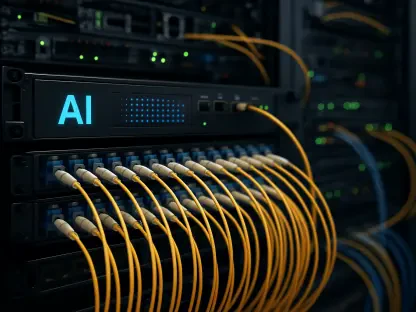

The dream of a self-healing, fully cognitive telecommunications network has long been the North Star for an industry burdened by rising operational costs and the unrelenting complexity of modern connectivity. However, the current landscape reveals a stark reality where the vast majority of global operators remain tethered to manual or minimally assisted operations, far from the idealized vision of total automation. Recent industry assessments indicate that approximately 79% of service providers are still operating at the earliest stages of the autonomous framework, relying heavily on human intervention to manage day-to-day traffic and troubleshooting. While the theoretical benefits of artificial intelligence and machine learning are widely accepted, the practical implementation of these technologies is moving at a measured, almost glacial pace. This discrepancy between ambition and execution stems from the fundamental difficulty of updating sprawling, heterogeneous infrastructures that were never designed for native autonomy.
Persistent Barriers: Technical Debt and Talent Gaps
A significant portion of the inertia holding back the telecommunications sector can be traced directly to the massive accumulation of legacy systems that underpin modern networks. Nearly half of industry executives point to aging Business Support Systems and Operations Support Systems as the primary roadblocks preventing the seamless integration of autonomous tools. These antiquated frameworks often lack the necessary APIs and data interoperability required to feed real-time information into advanced AI models, creating a fragmented environment where automation can only exist in isolated silos. When an operator attempts to layer sophisticated automation over a patchwork of decades-old software, the result is often a brittle system that requires more human oversight rather than less, defeating the original purpose of the investment. This technical debt acts as a gravitational pull, keeping most organizations at Level 0 or Level 1 of the maturity scale despite their public commitments to innovation.
Beyond the hardware and software limitations, a deepening crisis in specialized human capital is further complicating the transition to self-managed networks. Roughly 49% of the industry reports a critical shortage of expertise in AI and automation engineering, creating a scenario where the tools may be available, but the personnel to configure and maintain them are not. Building an autonomous architecture requires a unique blend of traditional network engineering knowledge and high-level data science skills, a combination that is currently in high demand across all sectors of the global economy. Without a robust pipeline of talent capable of designing predictive algorithms and managing complex cloud-native environments, operators are forced to remain in a reactive posture. This talent gap ensures that even when a company decides to move forward, it often struggles to scale its initiatives beyond small-scale pilot programs, leaving the broader network infrastructure as manual as it was years ago.
Strategic Shifts: Learning From Hyperscalers and Agents
To navigate these systemic hurdles, forward-thinking telecommunications firms are increasingly looking toward hyperscalers as both benchmarks and strategic partners. Companies like AWS and Google Cloud have already demonstrated high levels of automation within their own massive fiber networks, providing a blueprint for how software-defined architectures can handle scale and volatility. However, these tech giants have also experienced high-profile outages, serving as a cautionary tale that even the most advanced automation requires constant refinement and human-in-the-loop oversight to ensure resiliency. By observing the successes and failures of these hyperscalers, telcos are beginning to adopt a more pragmatic, modular approach to autonomy. This involves integrating specific cloud-native tools that focus on high-impact areas, such as dynamic traffic steering or energy optimization, rather than attempting a high-risk, wholesale replacement of their core operational frameworks.
The emergence of “agentic AI” and advanced predictive modeling is providing a vital bridge between current manual workflows and the long-term goal of full autonomy. Rather than simple scripts that follow a fixed set of rules, these newer AI agents can analyze vast amounts of telemetry data to identify patterns that precede network failures, allowing for intervention before the customer even notices a service degradation. This shift from reactive troubleshooting to predictive maintenance is being accelerated by strategic acquisitions and partnerships aimed at bringing sophisticated simulation capabilities in-house. Furthermore, the adoption of digital twin technology is allowing operators to create virtual replicas of their physical infrastructure. By running real-time simulations on these twins, companies can test the impact of network changes or capacity upgrades in a risk-free environment, significantly reducing the time and cost associated with physical deployments and capital expenditures.
Concrete Progress: Real-World Resilience and Future Steps
Practical evidence of the value of network autonomy is finally beginning to surface in the form of successful field implementations during extreme conditions. For instance, T-Mobile recently demonstrated the power of automated systems by executing approximately 30,000 antenna adjustments during a severe winter storm, a feat that would have been physically impossible for human crews to achieve in such a short timeframe. This automated response ensured that customer connectivity remained stable despite the weather-related disruptions, proving that even partial autonomy can provide a massive competitive advantage in terms of reliability and operational speed. Such successes highlight that while the industry is far from Level 5 autonomy, the incremental progress being made at Level 2 and Level 3 is already delivering tangible benefits to both the bottom line and the end-user experience. These real-world applications serve as the necessary proof of concept to justify continued investment in a difficult economic climate.
Looking ahead, the path to a fully autonomous future will require a fundamental shift in how telecommunications companies view their internal culture and operational structures. Leaders must prioritize the decommissioning of legacy systems and the aggressive upskilling of their workforces to ensure they are prepared for a software-centric environment. Organizations should focus on developing “self-healing” capabilities in small, manageable segments of the network before attempting broader rollouts, ensuring that each step forward is backed by reliable data and proven performance. The transition will likely remain a hybrid journey for the remainder of the decade, with manual and autonomous systems coexisting in a delicate balance. By focusing on interoperability and embracing the role of AI as a collaborative partner rather than a total replacement, operators can slowly but surely move toward the efficiency and scalability required to thrive in an increasingly connected world. The transition was always going to be slow, but the groundwork laid today will define the leaders of the next era.