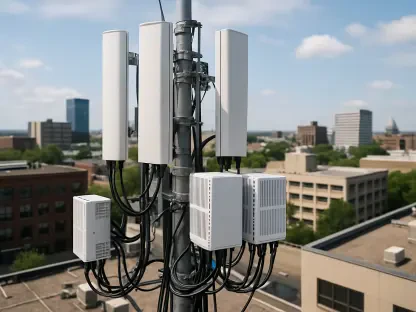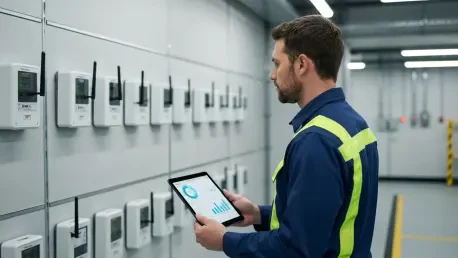

The conversation surrounding the Internet of Things has decisively shifted from speculative potential to tangible, large-scale reality, largely thanks to the maturation of its underlying connectivity fabric. With a global deployment base now exceeding 125 million connected devices, the Low-Power Wide-Area Network technology known as LoRaWAN has crossed a critical threshold, moving beyond early adoption to become a cornerstone of modern IoT infrastructure. This market “tipping point” signifies a fundamental change in perception and trust, where the technology’s installed base is so substantial and successful that its continued growth is virtually assured. For organizations across industries, the question is no longer whether to trust LoRaWAN for mission-critical applications, but rather how to leverage its proven capabilities to drive innovation and operational efficiency. The sustained 25% year-over-year growth rate underscores a deep-seated confidence in its ability to deliver reliable, scalable, and economically viable connectivity for a vast array of use cases.
The Pillars of Mainstream Adoption
At the heart of LoRaWAN’s ascent lies its exceptional radio performance, which is meticulously engineered to meet the core challenges of massive IoT deployments. The technology’s fundamental design enables battery-powered sensors to maintain connectivity over multi-kilometer distances for an impressive 5 to 10 years on a single battery. This unique combination of long range and extremely low power consumption fundamentally alters the economic equation for deploying sensors in remote, inaccessible, or power-constrained environments. It eliminates the prohibitive costs and logistical complexities associated with frequent battery replacements or installing wired power, which often render projects using higher-power alternatives like cellular technologies impractical. Furthermore, its superior deep indoor penetration and robust urban signal propagation unlock a wide range of use cases that would otherwise be unfeasible, such as monitoring utility meters in basements, managing assets in underground garages, and deploying environmental sensors within dense cityscapes.
Complementing its technical prowess is the robust ecosystem and international standardization that have cultivated enterprise confidence. The official recognition of LoRaWAN as an international LPWAN standard (ITU-T) in 2021 was a pivotal moment, providing organizations with strong guarantees of interoperability, long-term stability, and global support. This endorsement assured investors and adopters that they were building on a stable, future-proof foundation rather than a proprietary or fleeting technology. This confidence is further amplified by the sheer breadth and vibrancy of the surrounding ecosystem, which includes more than 600 certified devices, hundreds of network operators, and thousands of solution providers. This competitive landscape not only drives continuous innovation but also significantly de-risks deployment by offering enterprises access to established supply chains, proven integration expertise, and a diversity of options that prevent vendor lock-in, a stark contrast to the limited choices available in the market’s nascent stages.
Evolving for a Data-Driven Future
LoRaWAN is not a static technology but is actively evolving to power the next wave of IoT innovation driven by edge computing and Artificial Intelligence. While traditional sensor applications often involved transmitting tiny data packets measured in bytes, emerging AI-driven use cases demand the transfer of much larger data payloads. Audio segments for analysis can require tens of kilobytes, image data can range into the hundreds of kilobytes, and distributing updated AI models to edge devices can exceed several megabytes. To meet these new demands, LoRa technology is advancing with the integration of Fast Long-Range Communication (FLRC) modulation. This enhancement facilitates significantly higher data rates—up to 2.6 Mbps—while critically preserving the low-power characteristics essential for battery-operated devices. This evolution bridges the gap between traditional sensor connectivity and the high-speed data transmission required for sophisticated edge processing, enabling more intelligent and responsive IoT architectures.
This forward-looking approach positions LoRaWAN as a pragmatic and superior choice compared to emerging cellular IoT technologies like 5G RedCap for a vast majority of applications. While 5G technologies excel in scenarios demanding high bandwidth and ultra-low latency, such as augmented reality or industrial automation, their substantially higher power requirements render them unsuitable for most battery-operated IoT devices. The 5-to-10-year battery life of a LoRaWAN device remains a decisive technical advantage for use cases like remote environmental monitoring, agricultural sensors, and large-scale utility metering. In these domains, the need for frequent battery replacements or a permanent power connection makes 5G an impractical and economically unviable option. Consequently, the technologies serve different market needs, with LoRaWAN optimized for the characteristics that define the bulk of IoT deployments: exceptional battery longevity, wide-area coverage, and a low total cost of ownership.
Unlocking New Markets and Ecosystems
The continued growth of LoRaWAN is poised to accelerate as it expands into new markets, most notably the smart home. The technology is uniquely positioned to address the inherent limitations of traditional connectivity standards like Wi-Fi and Bluetooth by providing a unified, reliable platform for both indoor and outdoor applications. This capability enables a seamless, cohesive smart home experience that encompasses a diverse range of use cases, from monitoring solar panel performance and managing home security systems to controlling garage doors, outdoor lighting, and garden irrigation systems. By delivering robust, long-range connectivity that easily penetrates walls and extends across entire properties, LoRaWAN can eliminate the connectivity dead zones and fragmentation that often plague consumer smart home deployments, creating a more powerful and user-friendly automation environment that finally delivers on the promise of a truly connected home.
A key enabler of this expansion is LoRaWAN’s capacity to support multiple application-specific protocols on a single, unified platform. This multi-protocol convergence allows it to integrate seamlessly with prominent standards like Amazon Sidewalk, Meshtastic, wM-Bus, and Z-Wave, effectively acting as a unifying infrastructure that reduces complexity for device manufacturers and lowers deployment costs for consumers. By eliminating protocol fragmentation, it allows devices to support different standards without requiring hardware changes, which simplifies global supply chain management and accelerates scalability. This adaptability not only strengthens its position in the smart home market but also reinforces its role as a versatile and foundational technology capable of supporting a diverse and expanding ecosystem of smart devices and applications across various industries, ensuring its relevance and growth for years to come.
A New Baseline for IoT Innovation
The confluence of massive device growth, mature network deployments, and a clear technological roadmap confirmed that LoRaWAN had successfully navigated its early adoption phase. It reached a definitive tipping point of mainstream market acceptance, where its value was no longer a matter of debate but a demonstrated fact. The 125 million device milestone served as the ultimate validation of its ability to deliver reliable, scalable, and de-risked solutions on a global scale. For enterprises, vendors, and operators, the strategic focus fundamentally shifted from questioning if LoRaWAN could deliver on its promises to strategizing how to best capitalize on its established momentum and vast ecosystem. This transition cemented its status as a proven, baseline infrastructure essential for powering the next generation of innovation in smart cities, industrial operations, and data-driven sustainability initiatives.