
-The Dawn of a New Era in Telecom Infrastructure
The telecommunications landscape is at a critical inflection point, caught in a battle between two competing philosophies for building 5G networks. On one side stands the traditional, purpose-built Radio Access Network (RAN) hardware, long dominated by industry giants; on the other is the flexible, software-centric virtualized RAN (vRAN), which promises agility but has historically struggled with performance. A groundbreaking new processor from Intel is poised to decisively tip the scales in favor of virtualization. This article explores how Intel’s Granite Rapids chip is not just closing a performance gap but is fundamentally reshaping the economics and strategic trajectory of the entire 5G ecosystem, accelerating a shift that challenges the very foundation of legacy network vendors.
The Legacy of Compromise: Performance vs. Flexibility
For years, network operators faced a difficult trade-off. Traditional RAN solutions, built on proprietary, application-specific integrated circuits (ASICs), delivered unmatched performance and power efficiency. This custom-designed silicon was finely tuned for one job: processing radio signals. However, this performance came at the cost of vendor lock-in, high costs, and inflexibility. In contrast, vRAN emerged with the promise of an open, software-driven future, running on common, off-the-shelf (COTS) servers. This approach offered operators the freedom to mix and match vendors and rapidly deploy new services. The critical drawback, however, was efficiency. It often took two standard servers to do the work of a single custom-built appliance, leading to a larger physical footprint, higher energy consumption, and a greater total cost of ownership that tempered industry enthusiasm.
Reshaping the Core of the Network
Bridging the Performance Divide with General-Purpose Power
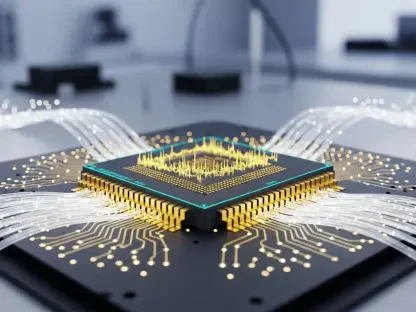
The long-standing argument against vRAN is rapidly dissolving thanks to a major technological leap. Intel’s latest-generation Xeon processor, codenamed Granite Rapids, represents a breakthrough in general-purpose computing. By dramatically increasing the number of processing cores integrated into a single system-on-a-chip (SoC), this new technology enables a standard COTS server to handle the intense computational demands of a 5G baseband unit on its own. This development directly attacks the core value proposition of custom ASICs, effectively eliminating the two-to-one hardware disadvantage that previously plagued vRAN deployments. The performance gap has narrowed so significantly that it forces a reevaluation of the need for expensive, proprietary silicon.
From Lab Concept to Commercial Reality
This technological advancement is not merely theoretical; it has been validated in the field by industry leaders. Samsung, the world’s largest provider of vRAN technology, recently achieved a major milestone by successfully completing a live commercial phone call on a major U.S. operator’s network using the Granite Rapids chip. The significance of this event extends beyond a single call, proving the technology’s commercial readiness. Samsung highlights that operators can now consolidate both RAN and emerging Artificial Intelligence (AI) workloads onto a single, powerful server. This consolidation promises substantial cost savings by reducing the hardware footprint, simplifying site design, and lowering power consumption, which translates directly into lower capital and operational expenditures for network operators.
Operator Endorsements and Deployment Realities
Major mobile operators are already embracing this shift. Vodafone, a key Samsung customer, is a vocal proponent, with its head of Open RAN confirming that the Granite Rapids platform delivers “much better capacity and efficiency” than its predecessors. This endorsement underpins Vodafone’s strategic decision to deploy Samsung’s vRAN technology across its European markets, a move that will increase pressure on traditional vendors. However, the transition is not without complexities. While new “greenfield” deployments can immediately leverage the new technology, operators with existing vRAN sites face upgrade costs. Furthermore, external factors like regulatory deadlines, as seen in the case of Canada’s Telus, can force pragmatic decisions to deploy slightly older technology to meet compliance, illustrating that real-world adoption is a strategic process, not an overnight switch.
The Shifting Economics and Future of RAN
The rise of high-performance general-purpose CPUs is creating an economic dilemma for incumbent vendors. Designing and manufacturing custom ASICs is an incredibly expensive endeavor, with R&D costs that must be recouped from a relatively small and, at present, shrinking global RAN market. In contrast, Intel’s processors benefit from the massive economies of scale and R&D budgets of the far larger global server market. As the performance advantage of custom silicon disappears, the economic justification for investing billions in proprietary hardware weakens considerably. This trend is reflected in market forecasts, with research firm Omdia predicting that vRAN’s market share will more than double between 2026 and 2028, largely catalyzed by the commercial availability of these new, powerful chips.
Strategic Takeaways for a Virtualized Future
The analysis presents a clear conclusion: the vRAN ecosystem has reached a pivotal moment. The core trade-off between the flexibility of software and the performance of custom hardware is becoming obsolete. For network operators, the primary recommendation is to reevaluate infrastructure roadmaps, focusing on the long-term total cost of ownership benefits offered by a consolidated, COTS-based vRAN architecture. For traditional equipment vendors like Ericsson and Nokia, the strategic imperative is to adapt. A continued reliance on a business model centered on proprietary silicon is becoming untenable. Instead, they must pivot toward software and services that can thrive in an open, interoperable ecosystem to remain competitive.
Conclusion: The Inevitable Shift to Software-Defined Networks
The narrative of 5G infrastructure is being rewritten. Intel’s Granite Rapids processor is acting as a powerful catalyst, accelerating the industry’s inevitable migration away from closed, purpose-built systems toward open, virtualized, and software-defined networks. This is more than just an incremental hardware upgrade; it represents an enabling technology that validates the vRAN model, promising a future of greater innovation, competition, and efficiency. As the lines between custom and general-purpose hardware continue to blur, the telecom industry is moving firmly into an era where software, not silicon, will define the network of tomorrow.