
The sheer volume of telemetry streaming from modern production lines has rendered traditional centralized cloud models insufficient for the real-time demands of autonomous industrial operations. As manufacturing and logistics facilities evolve into hyper-connected ecosystems, the requirement for instantaneous data processing has moved the center of gravity away from distant data centers and directly onto the factory floor. This shift represents the birth of Industrial Edge AI Infrastructure, a sophisticated synthesis of high-capacity networking and localized machine intelligence. It is no longer enough for a system to simply collect data; the modern industrial stack must interpret, reason, and act upon that data within milliseconds to remain competitive.
Evolution and Fundamentals of Industrial Edge AI
The genesis of this technology lies in the realization that the “dumb pipe” model of telecommunications could not sustain the next generation of industrial automation. Historically, industrial networks were designed for simple telemetry—tracking whether a machine was on or off or monitoring basic temperature fluctuations. However, the emergence of high-resolution computer vision and complex sensor arrays created a bandwidth bottleneck that traditional infrastructure could not resolve. This led to the development of a decentralized architecture where the network itself possesses the computational muscle to handle heavy workloads.
In the current technological landscape, this infrastructure serves as the essential bridge between raw physical activity and digital intelligence. It incorporates a multi-layered approach involving fiber-optic backbones for massive data transit and localized 5G nodes for flexible, low-latency device communication. By embedding AI capabilities directly into the network fabric, organizations can bypass the inherent delays of the public internet. This evolution has transformed telecommunications providers into critical orchestrators of industrial logic, placing them at the heart of the “Fourth Industrial Revolution.”
The significance of this transition cannot be overstated, as it fundamentally changes how enterprise data is valued. In the past, data was often stored first and analyzed later, a process that frequently resulted in missed opportunities for optimization. Modern edge AI infrastructure flips this script by prioritizing “in-flight” analysis. This means that data is interrogated the moment it is generated, allowing for a proactive rather than reactive operational stance. This context is vital for understanding why major infrastructure players are now partnering with specialized AI hardware and software firms to create a unified, high-performance environment.
Core Architectural Components of Connected AI
High-Performance Connectivity Backbone
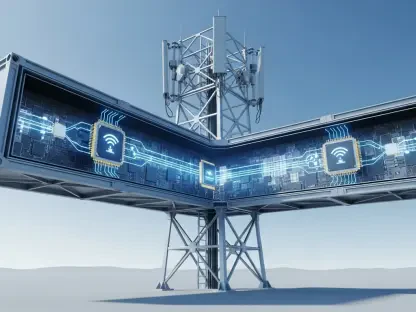
A robust connectivity backbone is the prerequisite for any functional edge AI system, as the reliability of the underlying network determines the ceiling for AI performance. Leading implementations have moved toward an “AI-ready” posture, characterized by massive investments in fiber capacity that now reaches speeds of 1.6Tbps across metropolitan and long-haul routes. This bandwidth is necessary not just for the volume of data, but for the velocity required to train and update models across distributed sites. The use of high-speed fiber ensures that the massive datasets required for generative AI training can be moved to centralized clouds without creating operational lag.
Furthermore, the integration of cloud-native environments directly into the network architecture has redefined the boundary between the carrier and the provider. By deploying specialized hardware at the edge of the network, infrastructure providers allow enterprises to run cloud workloads locally. This eliminates the “tromboning” effect where data must travel to a central server and back, which is a critical improvement for applications like autonomous mobile robots or precision synchronized machinery. This backbone creates a seamless pipeline where connectivity and computing power are essentially indistinguishable from one another.
Edge Computing and Inference Engines
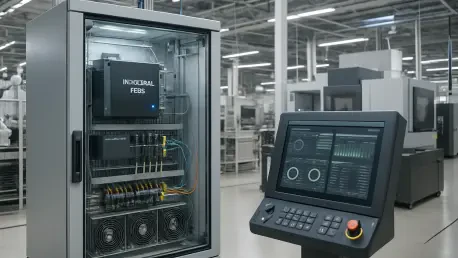
The secondary pillar of this architecture involves the deployment of localized inference engines that bring high-performance computing to the rugged environment of the shop floor. Unlike the centralized training of models, which requires vast arrays of cooling-intensive GPUs, edge inference focuses on the execution of those models in real-time. This is achieved through the integration of accelerated computing platforms that are optimized for power efficiency and specific tasks like video search and summarization. These engines allow a factory to process high-definition video feeds locally to detect micro-fractures in materials or safety violations without ever sending that video data off-site.
The technical brilliance of these systems lies in their ability to synthesize diverse data streams—from acoustic sensors to thermal imaging—into a single actionable narrative. By utilizing advanced orchestration software, these localized units can manage “agentic AI” workloads, where the AI itself takes autonomous steps to resolve issues. For example, an inference engine might detect a vibrational anomaly in a motor and automatically adjust the power frequency or schedule a maintenance ticket through a digital twin system. This localized intelligence ensures that the facility remains operational even if the external connection to the broader internet is temporarily interrupted.
Current Technological Trends and Strategic Shifts
A notable shift in the industry is the transition from a focus on AI training to a focus on AI inference at scale. While the previous years were defined by the race to build larger and more complex models, the current priority is the efficient deployment of those models in diverse, non-traditional environments. This has led to a strategic move toward “distributed compute,” where intelligence is spread across the network rather than concentrated in a few hubs. This trend is driven by the need for lower operational costs and the increasing demand for data sovereignty, as many industrial players are hesitant to send proprietary process data into the public cloud.
Moreover, the rise of generative AI has introduced the concept of natural language interaction with industrial machinery. Instead of monitoring complex dashboards, operators can now query the infrastructure using standard speech or text to receive summaries of equipment health or production efficiency. This shift toward “human-centric” AI is designed to bridge the skills gap in the manufacturing sector, allowing less experienced workers to leverage the insights of a highly sophisticated digital assistant. The focus has moved from merely gathering “big data” to generating “smart data” that provides immediate utility to the workforce.
Real-World Applications and Sector Deployments
The practical deployment of edge AI is most visible in smart manufacturing, where it has yielded quantifiable improvements in equipment effectiveness and waste reduction. In specialized environments like injection molding, early implementations have demonstrated the ability to reduce material waste by significant margins by identifying cooling inconsistencies in real-time. By the time a human operator might notice a defect, the AI has already analyzed thousands of telemetry points and adjusted the process, saving both time and raw materials. This level of precision was previously impossible when relying on manual inspection or delayed cloud analysis.
Beyond the factory walls, the technology is making significant inroads into rugged logistics and heavy-duty asset management. In sectors like oil and gas or construction, where assets are often located in remote areas with limited connectivity, the use of low-power wide-area networks combined with edge processing is transformative. Tracking systems now do more than just report a GPS coordinate; they monitor engine health, fuel consumption, and environmental conditions on containers and trailers. This provides a level of visibility that allows for global-scale logistics to operate with the precision of a localized assembly line.
Technical Hurdles and Adoption Barriers
Despite the rapid progress, several technical hurdles remain that prevent the ubiquitous adoption of edge AI. One of the primary obstacles is the complexity of integrating cutting-edge AI software with “brownfield” legacy equipment. Many industrial machines were built to last decades and lack the standardized communication protocols required for modern data extraction. Bridging the gap between a thirty-year-old hydraulic press and a modern neural network requires specialized gateway devices and extensive custom programming, which can be prohibitively expensive for smaller enterprises.
Security also remains a paramount concern as the attack surface of the industrial enterprise expands with every new edge device. Each localized AI node represents a potential entry point for cyber threats, necessitating a “zero-trust” architecture that can be difficult to manage at scale. Furthermore, the power requirements for high-performance edge computing are significant. Ensuring that a decentralized network of AI engines remains energy-efficient while operating in high-temperature or high-vibration environments is a continuing engineering challenge. Industry leaders are currently focusing on developing more resilient hardware and more efficient algorithms to mitigate these environmental and security risks.
Future Outlook and Scalability Potential
The trajectory of industrial edge AI points toward a future where the network is completely self-optimizing and predictive. We are moving toward a state where the infrastructure will not only identify problems but will also simulate millions of potential solutions in a virtual environment before implementing the best one in the physical world. The scalability of these systems will likely be enhanced by the integration of satellite-based connectivity, ensuring that even the most remote mining or drilling operations can access the same level of AI intelligence as a facility in a major metropolitan center.
Over the long term, this technology will likely lead to the creation of truly autonomous supply chains where factories, logistics hubs, and transport fleets are all part of a single, intelligent nervous system. This will involve a shift toward more flexible, outcome-based business models, where industrial firms pay for “uptime” or “efficiency” rather than just hardware and software licenses. As the cost of inference continues to drop and the speed of connectivity continues to rise, the barrier between the physical and digital worlds will become increasingly transparent, leading to a global industrial ecosystem that is more resilient and responsive than ever before.
Assessment of the Industrial Edge Landscape
The analysis of the industrial edge AI landscape revealed a sector that successfully moved beyond experimental pilots into a phase of broad, strategic implementation. The integration of high-bandwidth fiber with localized compute engines addressed the fundamental limitations of latency and data volume that previously hindered autonomous operations. It became clear that the most effective solutions were those that treated connectivity and intelligence as a singular, unified service rather than separate components. This holistic approach provided the necessary stability for enterprises to trust AI with mission-critical tasks on the production floor.
The market demonstrated that the primary value of edge AI lay in its ability to provide actionable insights at the point of data generation. The move toward distributive architectures and agentic AI proved to be the correct path for navigating the complexities of modern Industry 4.0. While technical barriers regarding legacy integration and security persisted, the overall trajectory remained positive as providers refined their “AI-ready” ecosystems. Ultimately, the infrastructure transitioned from being a supportive tool to becoming the essential framework upon which the future of global industrial productivity was built.