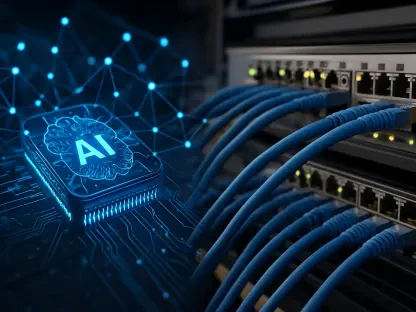

Modern telecommunications infrastructure is rapidly shedding its identity as a simple carrier of data to become the cognitive backbone of a global economy driven by machine intelligence. The industry is currently undergoing a metamorphosis that exceeds the scope of a standard technology upgrade. For decades, the sector focused on providing connectivity—moving voice and data from point A to point B. However, as 2026 progresses, a fundamental shift from a service-based model to an intelligence-based one is redefining the market. This transformation, fueled by global investments exceeding $3 trillion, turns providers into architects of a pervasive intelligence grid.
From Connectivity to Intelligence: A Historical Evolution
To understand this magnitude, one must look at the historical trajectory of the industry. Telecommunications traditionally evolved through defined cycles, from 1G to 5G, primarily centered on capacity and latency. These past developments treated connectivity as a commodity. The current landscape is different because the underlying value proposition has changed. Past success was tethered to the volume of data transmitted. Today, shifts in computing power allow the network itself to process information rather than just carry it. This evolution marks the end of the “dumb pipe” and the birth of a cognitive infrastructure.
Navigating the Architectural Shift of the Intelligence Grid
Redefining Value Through Tokenization and Efficiency
A critical aspect of this shift is the change in value metrics. The industry is moving away from traditional units like gigabytes toward a token-based service model. In this paradigm, efficiency is measured by the “dollar per token per watt.” This metric highlights a transition where intelligence is the primary product. By focusing on tokens—the fundamental units of processed AI—operators prioritize energy efficiency and high-scale computing. This allows companies to monetize the actual “thinking” performed by the network.
The Convergence of Diverse Sectors onto a Single Infrastructure
The emergence of an intelligence grid means telecom networks are becoming the foundational layer for finance, energy, and national defense. These industries increasingly rely on a shared infrastructure that manages complex systems in real-time. For example, a national energy grid integrated with an AI-driven telecom network can optimize power distribution with millisecond precision. However, this convergence brings risks regarding security and reliability. Maintaining a secure grid is now a matter of national importance rather than just a commercial agreement.
The Human Element: Workforce Evolution and Organizational Restructuring
The integration of AI is leading to a functional dismantling of the workforce. This is not merely about replacement; it is a shift in organizational structures. Traditional companies often struggle with legacy hierarchies and manual processes. The intelligence grid requires an automated approach where systems handle network optimization and strategic planning. While this creates anxiety regarding job displacement, it also presents an opportunity for AI-fluent professionals to manage these complex global systems.
The Technological Horizon: Scaling Intelligence Globally
Looking ahead, the shift toward an intelligence grid is defined by sovereign AI and decentralized computing. There is a clear move away from centralized data centers toward processing at the network edge, closer to the devices it serves. Regulatory environments must adapt, as traditional rules may not apply to a utility providing intelligence. Experts predict that the next few years will see companies acting as facilitators of a tokenized economy, where every transaction is filtered through a layer of AI.
Strategic Pillars for Navigating the AI Transformation
For businesses to thrive, several actionable strategies are essential. First, there must be an aggressive focus on energy-efficient computing, as sustainability is now a financial imperative. Second, legacy operators should prioritize the tokenization of services, moving away from flat-rate data plans toward value-added intelligent services. Finally, organizations must embrace a platform-first mentality to ensure infrastructure integrates with third-party applications. These steps allow stakeholders to become active participants in the revolution.
Concluding Thoughts on the Intelligence Revolution
The transition to an intelligence grid represented an inevitable evolution driven by unprecedented technological capability. Industry leaders moved beyond simple connectivity into a reality where the network acted as the brain of the global economy. This shift from bytes to tokens secured a trillion-dollar opportunity for those who dismantled old structures and embraced new metrics of success. Ultimately, the significance of this shift rested in its permanence; the grid became the foundation of modern civilization. The ability to adapt to this transformation defined the winners of the new economic epoch.