
The digital divide in the United States is narrowing at an unprecedented pace as a massive wave of infrastructure investment transforms the way millions of Americans access the internet. Recent data indicates that over 121,000 new locations have been integrated into the national grid through a combination of fiber-optic and fixed wireless technologies, stretching from the rural heartland of the Midwest to the sun-drenched coastlines of Florida. This aggressive expansion is being fueled by what many industry insiders call a modern-day gold rush, powered by a strategic blend of private capital, state-level grants, and significant federal initiatives such as the FCC’s Rural Digital Opportunity Fund. As telecommunications giants and agile regional providers race to lay down thousands of miles of glass, the focus has shifted from mere connectivity to ensuring that high-speed access becomes a standard utility rather than a luxury reserved for urban centers. The sheer scale of these projects suggests a fundamental shift in national priorities, where the goal of universal broadband is finally being met with the financial and logistical resources necessary for a true coast-to-coast modernization.
Establishing a Competitive Front in the Midwest
Ohio has rapidly evolved into a primary battleground for network supremacy, with major telecommunications players investing heavily to secure a foothold in previously underserved rural markets. Spectrum, a prominent brand under the Charter Communications umbrella, recently achieved a major milestone in its Western Ohio expansion by targeting more than 20,000 homes and businesses across a 11-county region. This $100 million initiative serves as a blueprint for modern infrastructure deployment, utilizing a diversified funding model that blends private capital with the Ohio Residential Broadband Expansion Grant Program. By focusing on counties like Auglaize, Champaign, and Darke, the company is proving that large-scale network construction is viable even in areas with lower population density. While many segments of this network are already operational, the company remains committed to maintaining its current momentum, with additional activations scheduled to go live throughout the remainder of 2026 to ensure comprehensive coverage.
The competitive landscape in the Buckeye State is further intensified by the presence of regional powerhouses that are unwilling to yield ground to national providers. For instance, altafiber is reinforcing its historical presence in the region by aggressively pushing its advanced XGS-PON fiber network into growing municipalities such as Grove City and Marysville. This specific expansion represents a leap in localized infrastructure, aiming to connect 32,600 total locations beginning in the second quarter of 2026. This trend underscores a broader industry consensus that fiber-to-the-home technology is the only sustainable standard for long-term scalability. By investing in these growing hubs, providers are not only addressing current demand but are also preemptively building the capacity required for future innovations. This localized competition benefits the consumer by driving down prices and forcing providers to offer higher tiers of service, effectively turning the Midwest into a model for how public-private partnerships can stimulate rapid technological advancement across diverse geographies.
Advancing Fiber Technology and Scalability
The technical backbone of this national buildout is increasingly centered on XGS-PON technology, which provides the symmetrical multi-gigabit speeds required for modern digital lifestyles. Unlike older passive optical networks, XGS-PON allows for equal upload and download speeds, a feature that has become non-negotiable for professionals working from home and families utilizing high-bandwidth entertainment services. In Marysville and Grove City, the deployment of this technology signifies a shift toward future-proofing communities against the ever-increasing data demands of the next decade. As more providers adopt this standard, the focus is shifting away from basic connectivity toward providing a seamless, high-capacity experience that can handle dozens of connected devices simultaneously. This technological leap ensures that the infrastructure being buried in the ground today will remain relevant and functional for decades, rather than requiring expensive upgrades just a few years after the initial installation is completed.
Scalability is the cornerstone of the current broadband philosophy, as providers recognize that the digital needs of 2026 are vastly different from those of only a few years ago. The industry is moving toward a model where network capacity can be increased through software updates and central office equipment changes rather than through disruptive physical construction. This approach allows companies to respond dynamically to the growth of local economies, supporting new business developments and housing projects without the lag time typical of traditional utility expansions. Furthermore, the push for fiber-to-the-home is being supported by sophisticated financial instruments, such as the $665 million asset-backed securitization recently utilized by Fidium Fiber. This level of financial sophistication allows for more predictable capital expenditures, enabling providers to commit to massive, multi-year projects that would have been financially unfeasible in the past. This blend of cutting-edge hardware and innovative financing is the primary driver behind the current acceleration of network deployments.
Navigating Coastal and Northwestern Markets
Connectivity efforts are also pushing into geographically challenging environments where construction often requires navigating complex local regulations and difficult terrain. Comcast is currently focusing its efforts on the Miami-Dade County coastline, where bringing the Xfinity network to beachside communities like Surfside and Miami Beach involves working around sensitive coastal ecosystems and high-density urban environments. In Surfside, the completion of work for over 1,000 locations demonstrates that even the most congested coastal areas can be modernized with the right engineering approach. Other projects, such as the work on the Venetian Islands, are on track for service by the summer of 2026, showcasing a commitment to bridging gaps in even the most exclusive and hard-to-reach neighborhoods. These coastal projects often serve as testing grounds for new construction techniques that minimize community disruption while maximizing the speed of deployment in high-traffic areas.
Simultaneously, the Pacific Northwest is seeing a similar surge in activity as providers work to ensure that college towns and smaller municipalities are not overlooked in the race for high-speed access. In Cheney, Washington, nearly 3,000 locations are being integrated into the regional grid, illustrating that the broadband gold rush is truly a national phenomenon rather than a localized trend. These efforts in the Northwest mirror the coastal strategies seen in Florida, where the goal is to create a contiguous network that provides reliable service across diverse topographies. Whether it is the rocky soil of Washington or the sandy shores of Miami, the industry is proving that modern engineering can overcome almost any physical barrier to connectivity. By integrating these smaller hubs into the national network, providers are creating a more resilient and interconnected digital infrastructure that supports regional economic development and provides residents with the same level of service found in the largest metropolitan areas.
Reaching Critical Milestones in the East
The Eastern Seaboard is witnessing a saturation of high-capacity fiber as providers reach critical milestones in their respective buildouts. In South Carolina, Brightspeed has reported that its state-wide fiber project is approximately 75% complete, already providing service to 47,000 locations across seven different counties. This massive undertaking is particularly significant in towns like Ninety Six, where the company’s strategy of saturating smaller markets with fiber is paying off in high adoption rates. By focusing on these mid-tier markets, providers are ensuring that the digital divide does not simply shift from rural areas to small towns. This comprehensive approach to market saturation allows for a more efficient deployment of resources, as construction crews can move systematically through entire regions rather than jumping between disconnected project sites. The progress in South Carolina is a testament to how focused, state-wide strategies can yield tangible results for residents in a relatively short period.
Further north, the Mid-Atlantic and Northeast regions are seeing the fruits of long-term engineering and construction efforts. Glo Fiber has begun lighting up its network in Springettsbury Township, Pennsylvania, following a multi-year construction phase that is expected to conclude by the end of this summer. This project will ultimately serve 7,000 locations, providing a new level of competition in a market that has historically been underserved. In New Hampshire, Fidium Fiber has expanded its reach to thousands of residents in Meredith, utilizing a robust financial foundation to support its growth. These projects in the Northeast are often more complex due to aging existing infrastructure and stringent local permitting processes, yet the pace of expansion remains high. The involvement of private equity and the rise of specialized consumer brands like Fidium have introduced a new level of professionalism and efficiency to the industry, ensuring that even the most established markets continue to evolve and offer residents the latest in high-speed technology.
Bridging Rural Gaps with Alternative Solutions
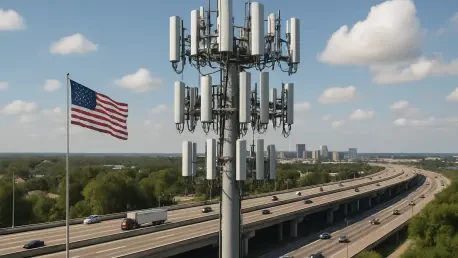
In regions where the high cost of burying fiber or the presence of rugged terrain makes traditional wired connections impractical, fixed wireless technology is increasingly being used to bridge the final gap. In Lost Hills, California, unWired Broadband has successfully launched a next-generation wireless network that utilizes advanced technology from Tarana to deliver high-speed access over the air. This project was made possible through a unique partnership with local businesses like The Wonderful Company, which provided tower access, and the Kern County Board of Supervisors, who coordinated community outreach. This collaborative model demonstrates that the broadband puzzle cannot always be solved with a one-size-fits-all approach. Instead, a diverse range of technologies must be deployed to meet the specific needs of each community. By using high-capacity wireless signals, providers can reach isolated farms and rural outposts that would otherwise be left waiting for years for a physical cable to reach their doorstep.
The shift toward this “all-of-the-above” technological strategy reflects a mature industry that is more focused on delivering results than on adhering to a single preferred medium. The involvement of private equity firms such as Macquarie and O2 Investment Partners suggests that investors see long-term value in these diverse connectivity solutions. As these companies continue to modernize American infrastructure, the distinction between urban and rural connectivity is beginning to vanish. Looking ahead, the focus must remain on maintaining these new networks and ensuring that service remains affordable for all segments of the population. The next logical step involves local governments working closely with providers to facilitate the rapid adoption of these services through digital literacy programs and subsidies for low-income households. By treating broadband as a foundational utility similar to water or electricity, the nation can ensure that the infrastructure built during this current gold rush continues to drive economic growth and social equity for the next generation of users.