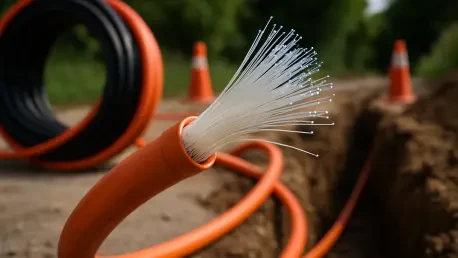

The transformation of the American landscape is no longer measured solely by physical highways but by the invisible threads of glass that transmit data at the speed of light. For decades, rural communities remained trapped behind a digital curtain, relegated to sluggish copper lines or unreliable satellite connections that stifled economic potential. Today, a massive mobilization of capital and technology is systematically dismantling this barrier, turning once-isolated counties into high-speed hubs. This shift is not merely a technical upgrade; it is a fundamental reconfiguration of how rural citizens participate in the modern global economy.
The Current State of Fiber Infrastructure and Rural Connectivity
Telecommunications providers are currently engaged in an aggressive shift toward high-speed fiber-optic networks, prioritizing underserved American regions that were previously deemed too expensive to reach. This movement is characterized by a unique synergy between regional specialists like Comporium and global industry giants such as Comcast and Spectrum. These entities are no longer working in isolation but are instead creating a patchwork of connectivity that covers everything from the dense woods of New Hampshire to the rolling hills of South Carolina.
The transition is largely driven by the obsolescence of legacy copper systems, which simply cannot keep pace with contemporary bandwidth demands. As the industry moves toward future-proof fiber standards, the market has reached a tipping point where competition for the first-mover advantage is fierce. Companies understand that the first provider to lay glass in a newly connected territory often secures a long-term monopoly on consumer loyalty and infrastructure dominance, making the race to build out as much about strategic positioning as it is about service delivery.
Driving the Expansion: Key Trends and Market Projections
Catalysts for Growth: Private Equity and Public-Private Partnerships
The financial engine behind this expansion is fueled by a combination of massive private equity infusions and strategic public funding. Firms like Oak Hill Capital and Novacap have recognized broadband infrastructure as a premier asset class, injecting hundreds of millions of dollars into regional ISPs to accelerate their deployment timelines. This private capital works in tandem with federal initiatives, such as the American Rescue Plan Act, which provides the necessary subsidies to make the high cost of rural construction palatable for investors and operators alike.
Consumer behavior has also shifted radically, with the rise of remote work and high-definition streaming necessitating symmetrical upload and download speeds that only fiber can reliably provide. To meet these needs, providers have adopted phased rollout strategies. Rather than waiting for an entire county-wide network to be completed, technicians activate localized segments as soon as they are ready. This approach generates immediate revenue to fund further construction while providing instant relief to residents who have spent years waiting for a stable connection.
By the Numbers: Fiber Reach and Performance Indicators
The scale of this progress is evident in the recent milestone of 174,000 new locations brought online through a series of coordinated state-level launches. Brightspeed has emerged as a dominant force in this arena, expanding its footprint to reach over 3 million locations across 20 different states. Such massive numbers indicate that the industrialization of fiber laying has reached a peak efficiency, allowing for rapid scaling that was unthinkable just a few years ago.
Growth projections suggest that rural fiber penetration will continue its steep upward trajectory through 2028. Success stories in states like California, Connecticut, and South Carolina are now serving as blueprints for national scaling. By analyzing the performance metrics of these early adopters, stakeholders are refining their deployment models to ensure that the next wave of investment yields even higher returns in terms of both subscriber growth and community impact.
Navigating the Obstacles: Topography, Costs, and Logistics
Despite the influx of capital, the physical reality of rural deployment remains a daunting challenge. The per-mile cost of laying fiber in geographically difficult areas—such as rocky mountain ranges or marshy lowlands—remains high. Engineers must often navigate treacherous terrain that requires specialized boring equipment and innovative aerial mounting techniques. These logistical hurdles are frequently compounded by labor shortages in the telecommunications construction sector, where the demand for skilled technicians far outstrips the available workforce.
To mitigate these issues, providers are working closely with local governments to streamline the permitting process, which has historically been a significant bottleneck. By reducing the bureaucratic friction involved in crossing public lands or attaching equipment to utility poles, companies can accelerate their ground-breaking schedules. Solving the last mile gap requires this kind of local cooperation, ensuring that the final stretch of cable actually reaches the farmhouse at the end of the road, rather than stopping at the main highway.
The Regulatory Framework and Compliance Standards
Federal and state regulations play a critical role in shaping the timeline and quality of rural broadband builds. Grant requirements often stipulate specific speeds and latency benchmarks that providers must meet to remain eligible for funding. Consequently, the FCC and state broadband offices have become more sophisticated in their mapping efforts, identifying precisely which underserved locations require intervention. This data-driven approach ensures that public money is directed toward the areas of greatest need rather than being diluted across already-served markets.
Compliance also extends into the realm of public utility standards and data security. As fiber becomes as essential as electricity or water, new infrastructure must adhere to strict reliability and privacy regulations. Many providers are also integrating community-centric services, such as public Wi-Fi in municipal parks, to meet social responsibility mandates. These efforts ensure that the new high-speed backbone supports not just private consumption but the broader public good.
The Future of Rural Broadband: Innovation and Long-Term Impact
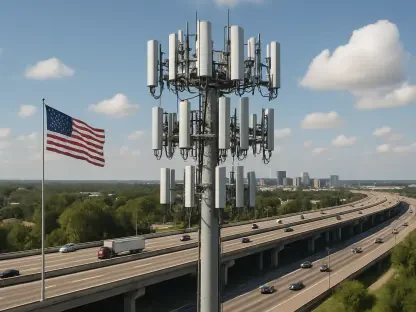
The arrival of fiber-optic technology is the catalyst for a new era of smart agriculture and rural telehealth. With a reliable high-speed connection, farmers can utilize real-time sensor data to optimize crop yields, while residents in remote areas gain access to world-class medical specialists through high-definition video consultations. Furthermore, fiber serves as the essential backhaul for 5G towers, creating a hybrid network environment where mobile and fixed-line services complement each other to provide comprehensive coverage.
This permanent access is already starting to reverse the trend of digital migration, where young professionals once fled rural areas for the connectivity of the city. By enabling a robust remote-work economy, fiber expansion allows rural towns to retain their populations and attract new residents. As investment cycles mature in the Northeast and the West, we can expect to see a more balanced national economy where geographic location no longer dictates an individual’s professional or educational potential.
Closing the Gap: A New Era for Rural Infrastructure
The convergence of federal support and aggressive private investment has successfully rewritten the script for American infrastructure. Fiber-optic technology proved to be more than a luxury; it functioned as the essential foundation for social and economic equity in the modern age. Stakeholders who prioritized long-term scalability over short-term savings found themselves leading a market that was hungry for reliable, high-speed access. To maintain this momentum, the industry should focus on cross-sector partnerships that integrate broadband with other utility upgrades, ensuring that the digital divide remains a relic of history. The focus must now shift toward digital literacy and the development of local tech ecosystems to fully leverage the power of these new networks.