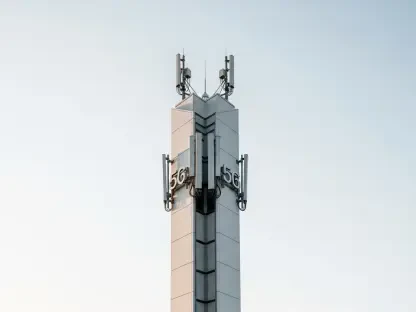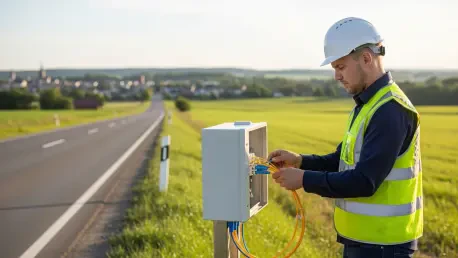

A quiet but transformative revolution is reshaping the digital landscape of the United States, as an unprecedented wave of public funding is being injected directly into the nation’s broadband infrastructure. Recognizing high-speed internet as an essential utility on par with electricity and water, federal, state, and local governments are forging powerful public-private partnerships with internet service providers. This strategic, nationwide effort is not merely about corporate investment; it is a deliberate policy aimed at bridging the stubborn digital divide. By financing the costly “last mile” of connectivity to rural and underserved communities—areas historically deemed unprofitable by the private market—these initiatives are fundamentally altering who has access to the modern economy, education, and healthcare. The sheer scale of this endeavor signals a consensus that universal broadband is a public good requiring direct government intervention to achieve.
The Federal Funding Powerhouse
At the heart of this expansive buildout are landmark federal initiatives designed to pour billions of dollars into network construction where it is needed most. Landmark programs, including the American Rescue Plan Act (ARPA) and the Federal Communications Commission’s (FCC) Rural Digital Opportunity Fund (RDOF), serve as the primary engines driving this progress. These funds function as a powerful subsidy, absorbing the high upfront capital expenditures associated with laying fiber optic cables and installing advanced network equipment in sparsely populated regions. This crucial financial backing effectively de-risks the investment for private telecommunications companies, creating a compelling business case for them to build robust, future-proof networks in territories they would otherwise ignore. This approach represents a strategic shift in national policy, treating broadband not as a commercial luxury but as foundational public infrastructure essential for national competitiveness and equity.
The impact of this federal strategy is already yielding tangible results on the ground, translating ambitious policy into functioning local networks. In North Carolina, Charter Communications’ Spectrum brand is leveraging substantial RDOF support to connect thousands of previously unserved homes and small businesses across several rural counties. Farther west, in New Mexico, the Penasco Valley Telephone Cooperative recently completed the state’s very first project funded by ARPA’s Capital Projects Fund, successfully bringing high-speed internet to a remote residential subdivision. Similarly, Oklahoma’s Broadband Office celebrated the completion of its initial projects backed by ARPA’s State and Local Fiscal Recovery Funds, with provider Dobson Fiber successfully connecting hundreds of locations in small, rural communities, marking a significant milestone in the state’s managed deployment efforts. These examples showcase a clear and direct line from federal appropriations to local connectivity.
State and Local Governments as Key Partners
While the financial fuel for this buildout often originates in Washington, D.C., state and local agencies act as the crucial intermediaries, directing the funds with precision and ensuring projects meet community needs. State broadband offices, such as ConnectLA in Louisiana and Connect New Mexico, have become indispensable players in this ecosystem. They perform the vital work of identifying unserved and underserved areas through detailed mapping, administering competitive grant programs, and forging the essential partnerships between public interest and corporate capabilities. These state-level bodies are responsible for turning broad federal mandates into specific, shovel-ready construction projects. By working directly with internet service providers, they ensure that public dollars are deployed efficiently and accountably, maximizing the impact of every grant awarded and tailoring solutions to unique local challenges.
This multi-layered, collaborative funding model is vividly exemplified by a major network expansion that recently concluded in Madison County, Mississippi. In this project, Comcast invested $7.6 million of its own capital, an amount that was effectively doubled by nearly $10 million in grants from both the county and the state of Mississippi. This deep partnership allowed for the rapid deployment of services to thousands of residents. In Vermont, an even more localized approach is proving successful. There, the Deerfield Valley Communications Union District, a local municipal entity, is using a carefully curated mix of state and federal funds to contract with Sertex Broadband Solutions for the expansion of its regional fiber network. This project, which will add 60 miles of fiber to several rural towns, demonstrates how empowered local leadership can effectively leverage higher-level government support to deliver infrastructure that directly benefits its constituents.
The Impact on Communities and Corporate Strategy
The ultimate and most significant outcome of this immense public investment has been a dramatic and tangible improvement in connectivity for thousands of American households and businesses. Across the country, projects are bringing fiber-optic speeds to communities that have long been stranded on the wrong side of the digital divide, unlocking new opportunities for economic growth, remote work, and modern education. For instance, Ziply Fiber’s ongoing builds are set to connect over 2,500 new locations in Cottage Grove, Oregon, providing residents with gigabit-speed internet for the first time. In Louisiana, a grant-funded project completed by Swyft Fiber just delivered service to nearly 3,000 homes and businesses in rural Allen Parish. These are not isolated successes but part of a nationwide pattern where public funds are directly translating into newly lit fiber, empowering communities that have been historically overlooked by private market forces alone.
A New Precedent for Infrastructure
The widespread infusion of public capital did more than just finance the construction of physical networks; it fundamentally reshaped the strategic landscape of the telecommunications industry. This concerted government push made rural expansion a viable and attractive growth vector for providers of all sizes, altering corporate investment priorities. The availability of grants and subsidies created new market dynamics, making smaller, regionally focused fiber companies attractive acquisition targets for larger players seeking to expand their footprint, a trend highlighted by Bell Canada’s 2025 acquisition of Ziply Fiber. Ultimately, these public-private partnerships established a new and effective precedent for building essential infrastructure. By successfully aligning public interest with private sector expertise, this model demonstrated a sustainable path forward for tackling large-scale national challenges and ensured that progress in bridging the digital divide became a shared, achievable goal.