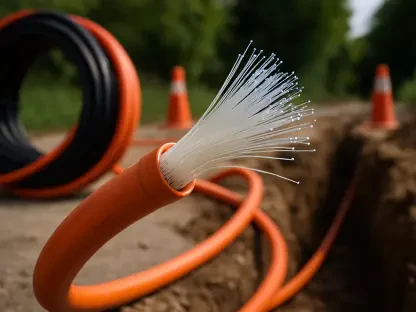

The telecommunications landscape is currently undergoing a radical transformation as the traditional coaxial cables that once only delivered television signals are now being pushed to match the performance of pure fiber-optics. This shift is not merely a minor upgrade but a fundamental reimagining of how Hybrid Fiber/Coaxial (HFC) networks operate in a world where symmetrical multi-gigabit speeds have become the baseline for digital participation. By leveraging the existing copper footprint, operators are bypassing the astronomical costs of total fiber overbuilds while delivering performance that was previously thought impossible for cable technology.
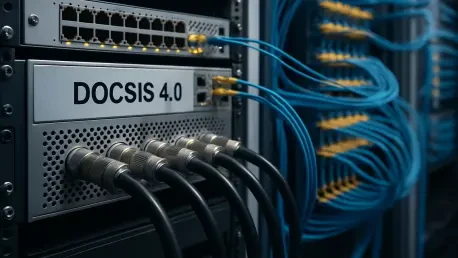
As the industry pivots toward the 10G initiative, the transition from DOCSIS 3.1 to 4.0 serves as the primary engine for this modernization. This evolution relies heavily on Distributed Access Architecture (DAA), which decentralizes network functions by moving them from a massive headend directly into the neighborhood nodes. This architectural shift reduces latency and increases reliability, ensuring that the HFC network remains a formidable competitor against emerging satellite and direct-to-home fiber services.
Critical Hardware and Functional Components
Remote PHY Devices and Unified Chipset Integration
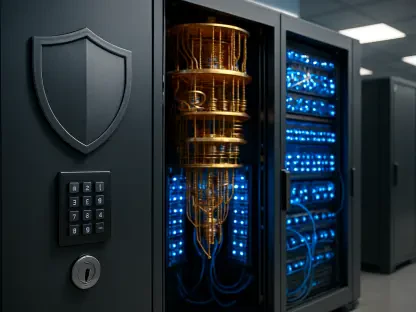
At the heart of this hardware revolution lies the Remote PHY Device (RPD), such as the Entra ERM422, which effectively pushes the physical layer of the network to its very edge. By utilizing advanced unified chipsets, these devices enable operators to support dual downstream service groups, reaching a combined capacity of up to 20 Gbit/s within a single node. This represents a massive leap in efficiency, as it allows for significantly higher data throughput without requiring the massive power draw or physical space typically associated with legacy hardware.
The implementation of these chipsets is unique because it addresses the “density problem” inherent in urban deployments. Instead of building more physical sites, engineers can now maximize the utility of existing cabinets. This optimization means that high-traffic residential areas can enjoy a more consistent experience during peak hours, as the network can dynamically manage the heavier load through smarter, more localized processing.
Extended Spectrum DOCSIS and 1.8GHz Upgrades
Expanding the usable frequency spectrum from 1.2GHz to 1.8GHz is the technical cornerstone that makes symmetrical speeds a reality. Traditionally, cable networks were lopsided, favoring downloads over uploads, but the move toward “high-split” architectures reallocates spectrum to balance this equation. This change is vital for modern users who rely on video conferencing, cloud-based gaming, and large-scale data uploads, turning a once-passive consumption medium into a two-way digital highway.
However, maintaining signal integrity at these higher frequencies presents significant physics-based challenges. As signals move into the 1.8GHz range, they attenuate more rapidly, requiring highly precise amplifiers and passive components to prevent data loss. This necessitates a meticulous hardware overhaul, where every connector and splitter must be rated for the higher frequency to ensure that the multi-gigabit promise is actually delivered to the subscriber’s modem.
Current Trends in Network Convergence and Virtualization
The industry is rapidly moving away from bulky, hardware-dependent systems toward virtual Cable Modem Termination Systems (vCMTS). By moving these functions into a software-defined environment, operators can scale their networks with the same agility as cloud providers. This virtualization allows for faster troubleshooting and more seamless software updates, effectively future-proofing the infrastructure against evolving standards without needing a technician to visit every neighborhood node.
Furthermore, the integration of “fiber-on-demand” through Passive Optical Network (PON) technologies within the HFC framework is creating a hybrid ecosystem. Through the Generic Access Platform (GAP), hardware integration is becoming standardized, allowing different vendor components to work together harmoniously. This interoperability is a significant departure from the proprietary “silos” of the past, fostering a more competitive and innovative marketplace for networking equipment.
Real-World Implementation and Deployment Strategies
Major operators are currently executing multi-phased roadmaps to modernize their footprints, balancing the need for speed with capital discipline. The first phases typically focus on expanding capacity to 1.2GHz and implementing high-splits to immediately address upstream bottlenecks. As these foundational layers are solidified, the focus shifts to deploying vCMTS and eventually reaching the 1.8GHz milestone, ensuring that the most labor-intensive upgrades are spread out logically over several years.
This strategic rollout is often accelerated by industrial synergy and high-profile mergers. When large entities consolidate, they can standardize their hardware procurement, often selecting a single vendor like Vecima to provide a unified solution across diverse territories. This consolidation not only reduces operational complexity but also provides the financial scale necessary to push toward 50G PON capabilities alongside DOCSIS 4.0, effectively bridging the gap between legacy cable and a fiber-centric future.
Navigating Technical and Economic Barriers
Despite the technological promise, the road to total DOCSIS 4.0 adoption is fraught with logistical and economic hurdles. The sheer cost of field upgrades—replacing thousands of amplifiers and nodes across vast geographic areas—is a staggering undertaking. Additionally, the labor shortage in specialized telecommunications engineering can slow down the physical deployment, even when the hardware is readily available and the software is fully optimized.
To mitigate these limitations, the industry is turning toward modular node designs and automated provisioning. By making the hardware “plug-and-play,” operators can reduce the time spent at each site, while automated systems handle the complex task of configuring the new nodes. These innovations are critical for maintaining signal quality in older neighborhoods where the existing coaxial plant may be decades old and prone to interference.
Future Horizons for High-Speed Broadband
The eventual destination for most networks is a transition toward full Fiber-to-the-Premises (FTTP), but DOCSIS 4.0 provides a vital and sophisticated bridge. As edge computing and low-latency processing become more prevalent, the ability of these next-generation HFC networks to support instantaneous data processing will become a key differentiator. This will enable advanced remote services, from immersive augmented reality to high-precision remote healthcare, which require both high bandwidth and rock-solid stability.
Looking further ahead, the ubiquitous nature of multi-gigabit connectivity will fundamentally reshape the digital economy. As symmetrical speeds become the standard, the distinction between “home” and “office” will continue to blur, and the geographic limitations of data-heavy industries will dissolve. The infrastructure being built today is not just about faster internet; it is about creating a platform for innovations that have yet to be imagined.
Conclusion and Strategic Assessment
The shift toward DOCSIS 4.0 was a masterclass in extending the utility of existing assets while meeting the soaring demands of a data-hungry society. This evolution proved that HFC networks could remain competitive against pure fiber by adopting virtualization and spectrum expansion. The technology functioned as a crucial bridge, allowing for a phased and financially sustainable transition to multi-gigabit symmetry. Ultimately, the successful deployment of these systems solidified a foundation for the next decade of digital growth, ensuring that connectivity remained robust and scalable as the world moved toward an increasingly decentralized and cloud-reliant future.