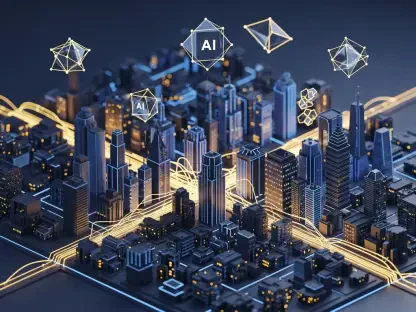
The ambitious vision of a smart city, an urban environment where technology seamlessly enhances quality of life, often raises a fundamental question about who builds its digital backbone. A compelling answer is emerging from an unexpected source: public utility providers. By repurposing their vast, existing infrastructure, entities like Dubai’s Electricity and Water Authority (DEWA) are demonstrating how the reliable networks that deliver power and water can be leveraged to transmit data, creating a smart city foundation that is both technologically advanced and financially sustainable. This innovative model, embodied by DEWA’s ICT subsidiary InfraX, transforms a nation’s most critical assets into a launchpad for its digital future. The inception of this approach is rooted in forward-thinking government initiatives designed to position Dubai’s services and sectors a decade ahead of international counterparts. InfraX functions as the essential technological backbone for its parent company, Digital DEWA, which itself is built upon four foundational pillars: Solar Energy, Energy Storage, Artificial Intelligence, and Digital Services, signaling a holistic integration of utility services with digital innovation.
From Utility to Tech Powerhouse
The innovative model is built on the unique premise of monetizing the internal assets of a public utility to drive national digital transformation. Originally developed to manage Dubai’s essential electricity and water grids, DEWA’s extensive fiber-optic network and communications infrastructure represented a significant but underutilized resource. InfraX was created to commercialize these assets, offering them to both government and private sector clients. This strategy effectively extends the mission-critical standards of reliability, security, and resilience inherent in utility management to the commercial marketplace. The core value lies in turning a previously internal cost center into a public-facing revenue generator that fuels further innovation. By doing so, it provides state-of-the-art network connectivity, comprehensive IoT infrastructure, and low-latency communication services that are vital for the development of a modern, interconnected urban landscape. This unique genesis grants it unparalleled access to a robust portfolio that becomes the bedrock for smart city applications.
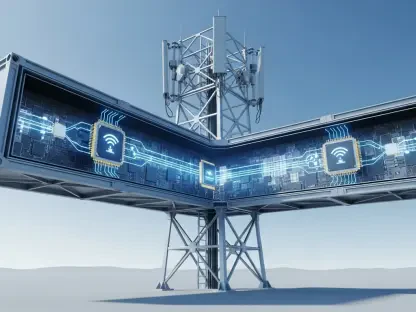
This transformation from a traditional utility support system to a commercial tech provider materializes through a suite of sophisticated service offerings. The first category is a state-of-the-art network infrastructure that capitalizes on DEWA’s extensive and secure fiber-optic network, which runs parallel to the nation’s core power and water lines. This provides an incredibly resilient and secure data transmission highway. The second major offering is a comprehensive IoT infrastructure, designed to support the widespread deployment of smart devices and sensors across the city. Finally, InfraX delivers mission-critical, low-latency communication services, which are indispensable for managing national infrastructure and enabling real-time applications that require instantaneous data transfer. The high standards of performance and uptime, which are non-negotiable for managing a utility grid, are now the baseline for these commercial services, giving clients an unparalleled level of confidence and operational continuity in their own digital endeavors.
A Winning Strategy for Digital Transformation
The success of this approach hinges on a carefully crafted strategy that masterfully combines the deep-seated stability of a utility with the innovative agility of a technology company. A cornerstone of this operational model is the strategic monetization of critical assets. By transforming internal resources, such as the thousands of kilometers of fiber-optic cables, into high-value commercial connectivity services, InfraX creates a self-sustaining financial cycle. The revenue generated from these commercial offerings is reinvested directly into next-generation technologies, such as advanced IoT networks and AI platforms. This fuels a continuous loop of innovation without placing an additional financial burden on the public or requiring new streams of government funding. This model not only maximizes the value of existing public infrastructure but also ensures that the technological evolution of the city is economically viable and sustainable over the long term, creating a powerful engine for digital progress.
This strategy is powerfully reinforced by two other crucial elements: the cultivation of strategic partnerships and the fostering of an open, neutral ecosystem. Recognizing that no single entity can build a smart city alone, InfraX actively collaborates with a diverse range of partners, including global technology leaders and prominent local champions like the data hub provider Moro Hub. This collaborative model ensures that the infrastructure being deployed is not only technically robust but also deeply integrated with other systems and future-proofed against rapid technological change. Furthermore, the commitment to an open ecosystem is pivotal. InfraX provides a scalable, neutral connectivity layer that empowers other government entities and private enterprises to innovate and build their own services on top of a reliable foundation. A key enabler of this is its special-purpose IoT license, which formally permits the commercialization of essential IoT networks across the country, effectively democratizing access to smart city infrastructure and lowering the barrier to entry for innovators.
Tangible Impact Building the Smart City
The practical impact of this innovative utility-led model is best illustrated through its landmark achievements in accelerating the UAE’s smart city agenda. One of InfraX’s most significant contributions is providing the foundational network for Moro Hub’s green data center, a facility that holds a Guinness World Record as the world’s largest solar-powered data center. This state-of-the-art facility has massive operational demands that require ultra-fast, highly reliable, and secure connectivity to function. InfraX delivers this indispensable digital infrastructure, showcasing a powerful symbiosis where foundational connectivity directly enables and supports national sustainability objectives. This relationship is a clear demonstration of how leveraging utility assets can contribute significantly to broader goals, such as the UAE’s Clean Energy Strategy and its Net Zero 2050 ambitions, proving that a smart city can also be a sustainable one. The success of the data center is intrinsically linked to the quality of the underlying network.
Another game-changing success is the deployment and enablement of the nation’s first public LoRaWAN (Long Range Wide Area Network), a development that is fundamentally altering the landscape for mass adoption of IoT and smart city applications. This technology provides a low-power, wide-area network specifically designed to connect vast numbers of battery-powered sensors over large distances at a substantially lower cost than traditional cellular networks. By providing this accessible, city-wide network, InfraX is significantly lowering the barrier to entry for both government and enterprise clients to deploy sensors for a diverse range of applications, including utility consumption monitoring, environmental quality control, smart parking management, and industrial asset tracking. The resulting influx of reliable, newly accessible data serves as the critical fuel for Big Data applications and Artificial Intelligence, enabling more sophisticated capabilities like predictive maintenance for city infrastructure, smarter urban planning based on real-world data, and next-generation industrial automation.
The Blueprint for a Connected Future
The strategic repurposing of utility assets provided a foundational layer for digital transformation. By pioneering next-generation connectivity solutions like LoRaWAN and fostering a collaborative ecosystem, the model established the essential infrastructure that powered a broader vision for a digital-first society. This work was instrumental in cementing Dubai’s leadership position in the global race to build a truly smart, connected, and sustainable urban future. The projects demonstrated that the path to a smart city did not necessarily require building entirely new networks from scratch but could be accelerated by intelligently leveraging the robust, secure, and extensive infrastructure already in place. This approach offered a blueprint for other cities worldwide, proving that the silent networks powering daily life held the key to unlocking the next generation of urban innovation and efficiency.