
The modern enterprise currently faces a digital reality where a single minute of network downtime carries a staggering nine-thousand-dollar price tag. This financial pressure, coupled with the complexity of multi-cloud environments, has rendered the traditional “Franken-network”—a patchwork of disparate legacy systems—not just inefficient, but dangerous. The shift toward AI-native networking represents the first true departure from reactive maintenance, offering a blueprint for a self-sustaining digital nervous system.
Introduction to AI-Native Networking
The transition from legacy architectures to unified, AI-native infrastructures marks a fundamental change in how data moves across global enterprises. Rather than layering automation on top of existing hardware, these systems are built on data-centric architectures that integrate machine learning into the very fabric of the network. This design allows the infrastructure to understand the context of the data it carries, moving beyond simple packet switching to intelligent traffic management.
As organizations grapple with the rising demands of edge processing and cloud scalability, the emergence of these systems has become a direct response to the limitations of human-managed configurations. Autonomous infrastructure is no longer a peripheral experiment; it is the cornerstone of operational resilience. By embedding intelligence at the core, companies can finally address the systemic vulnerabilities that have long plagued fragmented IT environments.
Core Architectural Components and Capabilities
Autonomous Operations: The Self-Healing Shift
The leap from basic automation to full network autonomy is defined by the system’s ability to identify and remediate issues without human intervention. While traditional scripts can follow “if-then” logic, AI-driven networks utilize predictive models to adjust parameters in real-time. This capability significantly reduces the mean time to repair, as the system can re-route traffic or isolate a failing node before a human operator even receives an alert.
These mechanisms optimize data flow by constantly analyzing performance metrics and environmental variables. The result is a system that maintains peak efficiency regardless of fluctuations in demand. By removing the bottleneck of manual configuration, organizations can reallocate their engineering talent to high-value strategic initiatives rather than basic troubleshooting.
Advanced Observability: Beyond Monitoring
Modern observability represents a quantum leap over traditional monitoring by providing deep insights into hybrid and multi-cloud environments. While monitoring tells a team that a system is down, observability explains why the failure occurred across complex, interconnected layers. This level of visibility is crucial for ensuring that AI implementations do not inadvertently create new bottlenecks while attempting to solve old ones.
High-fidelity visibility allows for a granular understanding of how applications interact with the infrastructure. Without this clarity, the “black box” nature of AI could hide emerging system weaknesses until they become catastrophic failures. Consequently, deep observability serves as the necessary counterbalance to autonomy, ensuring that the network remains transparent and accountable to its human supervisors.
Emerging Trends and Technological Innovations
The industry is currently witnessing a massive convergence where network and security operations merge into unified command centers. This integration eliminates the silos that previously delayed incident responses, allowing for a synchronized defense strategy. Moreover, the rise of “cryptographic agility” is becoming a priority as decryption capabilities evolve, forcing networks to be capable of swapping encryption protocols instantly to stay ahead of sophisticated threats.
A critical distinction has emerged between “AI for Networking” and “Networking for AI.” The former focuses on using intelligence to tune the internal pipes, while the latter optimizes the infrastructure specifically to handle the massive, bursty workloads required by large language models. Balancing these two priorities is essential for any modern data center, as the underlying hardware must support both the management of the network and the intense demands of the applications running on it.
Real-World Applications and Sector Integration
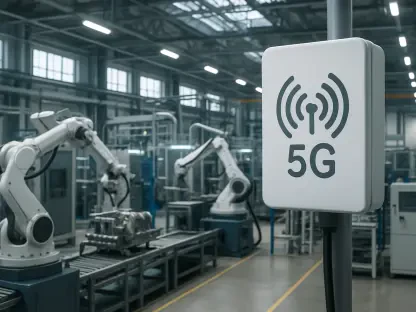
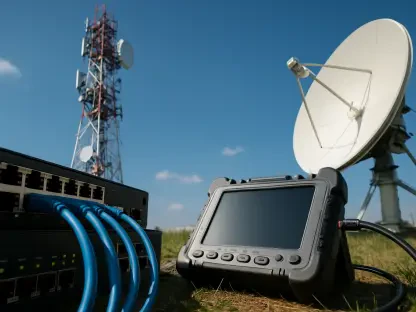
Telecom providers are now utilizing AI to manage the astronomical traffic loads generated by 5G and IoT deployments. These systems dynamically allocate bandwidth based on real-time demand, preventing congestion in high-density urban areas. Similarly, the financial sector has adopted AI-driven networking as a primary defense mechanism, mitigating the high costs of cyber incidents by identifying anomalous patterns that suggest a breach or a localized outage.
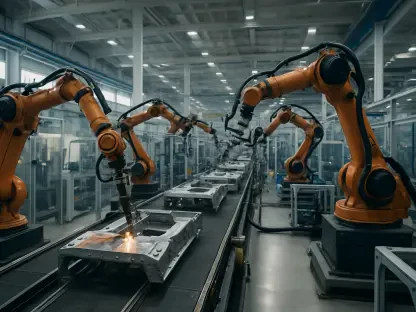
In the industrial sector, edge computing relies on low-latency autonomous networking to maintain safety and efficiency on the factory floor. When sensors and robotics require microsecond response times, the delay of sending data to a central cloud is unacceptable. AI-driven edge networks ensure that critical processing happens locally and reliably, proving that autonomous infrastructure is as much about physical safety as it is about digital throughput.
Challenges, Risks, and Adoption Barriers
Integrating legacy disparate systems into a cohesive AI framework remains the most significant technical hurdle for established enterprises. Many organizations are hindered by “technical debt,” where the cost of replacing old hardware exceeds the immediate budget, even if the long-term savings are clear. This financial barrier often leads to “hybrid-mess” scenarios where AI sits awkwardly on top of hardware it cannot fully control.
Security risks specific to AI, such as data poisoning and model manipulation, introduce a new layer of vulnerability. If an attacker can influence the data the network uses to learn, they can potentially open backdoors or cause systemic instability. Furthermore, there is a substantial human capital gap; existing teams must be retrained to oversee autonomous environments, shifting their focus from manual CLI entries to high-level policy management and model oversight.
Future Outlook and Generational Shifts
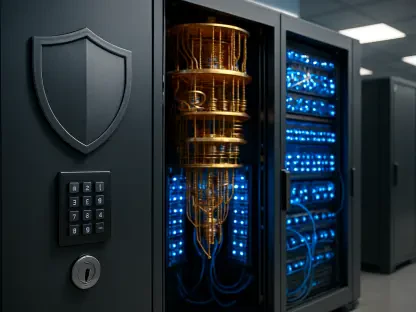
The next phase of infrastructure development will be dominated by quantum-safe networking and the deployment of next-generation encryption protocols. As traditional cryptographic methods face potential obsolescence, the infrastructure must be ready to pivot to lattice-based or other quantum-resistant standards. This shift will ensure that data remains secure even as the computational power available to malicious actors reaches new heights.
We are also moving toward fully predictive networking, where AI anticipates hardware failures and traffic spikes long before they manifest. This foresight will transform global connectivity by democratizing high-speed access, as self-optimizing networks can extend reliable service to underserved regions without the need for massive on-site engineering teams. The long-term impact will be a more resilient and equitable global digital economy.
Summary and Final Assessment
The evolution from manual oversight to autonomous management has proven that AI-driven infrastructure is a strategic necessity for any organization operating in a high-stakes digital environment. The transition requires more than just a software update; it demands a total rethink of how connectivity and security intersect. Successful implementation hinges on a unified strategy that balances the speed of AI with the precision of human expertise and the foresight of quantum readiness.
Moving forward, the focus must shift toward eliminating technical debt and fostering a culture of continuous modernization. Organizations should prioritize architectures that offer deep observability and cryptographic flexibility to remain resilient against both operational failures and emerging cyber threats. Ultimately, those who treat their network as a dynamic, intelligent asset rather than a static utility will be the ones to thrive in the coming years of rapid technological shifts.